
Deck Coating Options
Comparing elastomeric, acrylic, polyurethane, and epoxy coatings for decks and balconies
Last updated: June 28, 2026
Overview
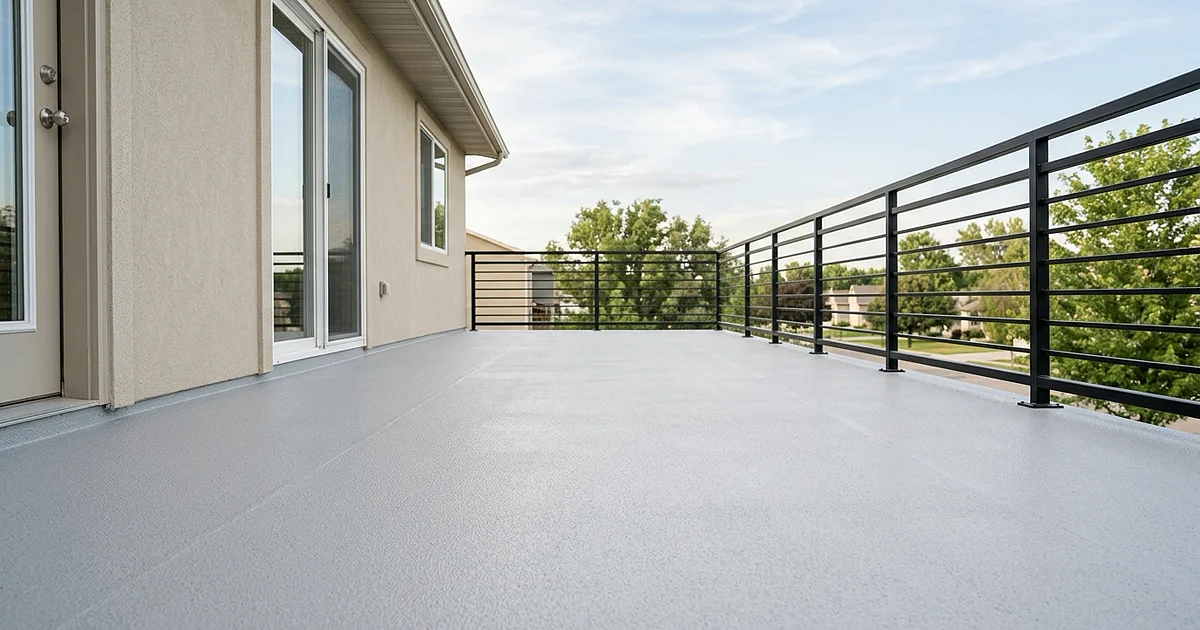
Deck coatings protect walking surfaces from water intrusion, UV degradation, and foot traffic wear. The right coating extends the life of the deck structure, prevents costly moisture damage to framing and occupied spaces below, and maintains a safe, slip-resistant walking surface.
Choosing the wrong coating is expensive. Peeling, cracking, or delamination means stripping the surface and starting over. This guide covers the four main coating types, when to use each one, and how to match coatings to your project requirements including California SB 721/326 compliance.
The short version: match the coating to three things — the substrate (plywood vs. concrete), the traffic level, and whether it sits over occupied space. Elastomeric is the versatile crack-bridging default; polyurethane handles heavy traffic and chemicals; acrylic is the budget, light-duty option; epoxy is for rigid concrete with a UV topcoat. For permitted balcony or deck work over living space, specify a tested waterproofing system and confirm acceptable evidence — often an ICC-ES evaluation report — with your building official.
A coat or two of deck paint or sealer dresses and protects the surface; a tested, fabric-reinforced waterproof deck coating system is what protects the structure below — coat count alone doesn't make a product waterproof. Full systems typically combine a base or membrane layer (liquid-applied or cementitious), often with reinforcing fabric and a slip-resistant topcoat, and can earn an ICC-ES evaluation against AC39. Deck Flex's ESR-3672 documents two systems: the W.M. system (cementitious base, for plywood, with a Class A roof-covering classification) and the W.F. liquid-applied system, which works over both plywood and concrete (Class B roof-covering classification).
For projects over occupied space (balconies, roof decks above living areas), the building official decides what evidence is acceptable — commonly an ICC-ES AC39 evaluation report for a proprietary system. Verify with your local jurisdiction before specifying.
Types of Deck Coatings
Four coating technologies dominate the deck coating market, each with distinct performance characteristics, application requirements, and cost profiles. One note on terms: "elastomeric" describes how a coating behaves — it stretches and recovers — while acrylic, polyurethane, and epoxy describe the resin chemistry, and acrylic or polyurethane systems can themselves be elastomeric. Choose a complete, tested system by substrate, traffic, and exposure rather than by resin name alone.
| Coating Type | Best For | Durability | Cost Range | Cure Time |
|---|---|---|---|---|
| Elastomeric | Balconies, roof decks, crack bridging | 10-20 years | $$-$$$ | 24-72 hrs |
| Acrylic | Budget projects, light traffic areas | 3-7 years | $ | 4-8 hrs |
| Polyurethane | High traffic, commercial, chemical exposure | 10-15 years | $$$ | 24-48 hrs |
| Epoxy | Concrete decks, parking structures, basements | 5-10 years | $$-$$$ | 24-72 hrs |
The durability and cure-time figures above are typical ballparks for comparison. Actual service life, cure schedule, and elongation vary by the specific product and system — verify them against the manufacturer's technical data sheet (TDS) and ICC-ES report. And a coating's elongation-at-break is a lab value, not the crack width it can bridge in service.
Elastomeric Coatings
Elastomeric coatings are rubber-like membranes that stretch and recover with substrate movement. Many systems bridge non-structural hairline cracks (often below 1/16") with a detail coat and maintain waterproofing through thermal cycling; larger or moving cracks need routing, sealant, and reinforcement per the system detail. Most ICC-ES AC39 evaluated deck systems are elastomeric, though AC39 also covers other system technologies.
- Elongation: 300-500% (stretches without tearing)
- Waterproofing: excellent - forms continuous monolithic membrane
- UV resistance: good with proper top coat
- Recoatable: usually, with proper prep and an adhesion check on the existing surface
- Application: roller, brush, or spray (multiple coats required)
Acrylic Coatings
Acrylic deck coatings are water-based, fast-drying, and the most affordable option. Most acrylic deck paints provide basic UV and moisture protection but lack the elasticity and crack-bridging of a full elastomeric waterproofing system (some acrylic-based systems are formulated as elastomeric — check the tested product).
- Elongation: 50-150% (limited flexibility)
- Waterproofing: varies by product — decorative acrylics are water-resistant, while some acrylic systems are tested as elastomeric waterproofing
- UV resistance: excellent color and gloss retention
- Recoatable: yes - easy maintenance recoating
- Application: roller or brush, fast dry time
Polyurethane Coatings
Polyurethane coatings offer superior abrasion resistance and chemical resistance. They are the go-to for commercial decks with heavy foot traffic, rolling loads, or chemical exposure. Available in both aromatic (interior/covered) and aliphatic (UV-stable exterior) formulations.
- Elongation: 200-400% (good flexibility)
- Waterproofing: excellent - chemical-resistant membrane
- UV resistance: aliphatic formulations are UV-stable; aromatic will yellow
- Recoatable: varies - surface prep critical for adhesion
- Application: roller or spray, moisture-sensitive during cure
Epoxy Coatings
Epoxy coatings create extremely hard, durable surfaces with excellent adhesion to concrete. They are primarily used on concrete decks, parking structures, and below-grade applications. Epoxies are not UV-stable and require a topcoat for exterior use.
- Elongation: minimal (rigid - does not bridge cracks)
- Waterproofing: excellent on intact substrates
- UV resistance: poor - will chalk and yellow without topcoat
- Recoatable: yes with proper surface preparation
- Application: roller or squeegee, two-part mixing required
Selection Guide
New Construction vs. Restoration
New construction gives you a clean substrate and the flexibility to choose any system. Restoration projects are constrained by the existing surface condition and compatibility with prior coatings.
- New construction over plywood: elastomeric system with reinforcement fabric
- New construction over concrete: polyurethane or elastomeric
- Recoating an existing elastomeric deck: compatible elastomeric topcoat
- Restoring a failed acrylic coating: strip to substrate, apply elastomeric system
- Concrete deck restoration: epoxy primer + polyurethane or elastomeric topcoat
By Climate
Temperature extremes and moisture levels determine how much the coating needs to flex and how fast it needs to cure.
- Hot/dry climates (desert SW): aliphatic polyurethane for UV + heat resistance
- Freeze-thaw climates (Northeast, Midwest): elastomeric with high elongation
- High-rain areas (Pacific NW): elastomeric with reinforced waterproofing
- Coastal/salt air: polyurethane for chemical and salt resistance
- Mild climates (Southern CA): more options are viable, but still choose by substrate approval, waterproofing duty, UV, traffic, fire class, and AHJ requirements
By Traffic Level
- Light residential foot traffic: acrylic or elastomeric
- Moderate residential (entertaining decks, pool surrounds): elastomeric
- Heavy commercial foot traffic: polyurethane
- Rolling loads (carts, dollies): polyurethane or epoxy + urethane topcoat
- Parking structures: epoxy primer + polyurethane traffic coating
California Requirements
California requires periodic inspection of exterior elevated elements on multi-family buildings under SB 721 and SB 326. These are inspection-and-repair laws for wood-supported balconies, walkways, and decks more than 6 feet above grade — not coating-product mandates — and failed waterproofing is a common finding.
SB 721 (Apartments and Rentals)
Applies to non-condominium buildings with three or more multifamily units, covering wood-supported exterior elevated elements (balconies, walkways, decks) more than 6 feet above grade. Requires inspection at least every 6 years; the first-inspection deadline was extended to January 1, 2026. When waterproofing deficiencies are found, repairs must use code-compliant systems.
SB 326 (Condominiums and HOAs)
Applies to condominium and common-interest developments with three or more multifamily units, for the wood-supported elevated elements the association maintains. Requires inspection at least every 9 years by a licensed structural engineer or architect (first deadline January 1, 2025). Repair requirements are similar to SB 721.
ICC-ES AC39 Compliance
For permitted waterproofing work on balconies and decks over occupied space, an ICC-ES AC39 evaluation report is a common way to show a proprietary system was independently tested — but the building official decides what evidence is acceptable, so confirm locally. AC39 evaluates properties such as weathering, adhesion, abrasion, water resistance, flexibility, and (where applicable) roof-covering fire classification; it does not include a general slip-resistance test, and any hourly fire rating is a separate, system-specific evaluation.
Caution: Many deck coatings sold at retail are not evaluated to AC39 at all. For permitted work over occupied space, confirm what your building official accepts and check that the system's ICC-ES evaluation report is current before specifying — using an unproven product can mean a failed inspection.
Application Best Practices
Surface Preparation
Surface preparation is the single biggest driver of coating performance. Skipping or shortcutting prep is the primary cause of coating failure.
- Remove all loose, flaking, or failing existing coatings
- Clean surface of dirt, oil, grease, and contaminants
- Repair cracks, spalls, and substrate damage before coating
- Profile concrete per the product data sheet (shot blast or grind; some systems prohibit acid etching)
- Ensure plywood substrates are dry (moisture meter reading below 15%)
- Prime substrate per coating manufacturer specifications
Application Conditions
- Temperature: most coatings require 50-90°F air and surface temperature
- Humidity: below 85% relative humidity (check product TDS)
- Dew point: surface temperature must be at least 5°F above dew point
- Wind: avoid application in high wind that accelerates cure and creates texture defects
- Rain: no rain in forecast for minimum 24 hours after application
- Time of day: start early enough that coating can begin curing before evening dew
Common Mistakes
- Applying too thin - undermines waterproofing and durability
- Skipping reinforcement fabric at transitions and drains
- Coating over damp substrate - causes blistering and delamination
- Mixing incompatible coating systems (e.g. urethane over uncured epoxy)
- Ignoring manufacturer coverage rate specifications
- Not allowing adequate cure time between coats
Specifying a deck or balcony coating?
Tell us the substrate, square footage, and whether it's over occupied space, and we'll help match an ICC-ES AC39 system and pricing. Quotes back within one business day.
or call 714-248-6555 · email partners@usmadesupply.com
Frequently Asked Questions
Can I apply a new coating over an existing one?
It depends on the existing coating type and condition. Elastomeric over elastomeric usually works if the existing surface is sound and clean. Applying over a failing coating never works. When in doubt, strip to substrate and start fresh.
How often do deck coatings need recoating?
It varies by system, thickness, traffic, and UV exposure — light-duty acrylics far sooner than reinforced elastomeric or polyurethane systems. Inspect annually and recoat per the manufacturer's guidance, or when you see wear-through to the base coat or primer.
What coating works on both plywood and concrete?
Approved substrates are system-specific — check each system's ESR. Many lines cover both: Deck Flex's W.M. system is evaluated for plywood and its W.F. system also works over concrete, so the right system handles either substrate.
Do I need an ICC-ES AC39 evaluated product?
For permitted waterproofing over occupied space, the building official decides what evidence is acceptable; an ICC-ES evaluation report (AC39) is a common way to document a tested system, but it is not a universal mandate — confirm locally. For ground-level decks not over occupied space it is rarely required, though it still signals a properly tested product.
Which coating is best for a pool deck?
Elastomeric or polyurethane with a textured slip-resistant finish. Pool decks need excellent waterproofing, chemical resistance (chlorine), UV stability, and a high coefficient of friction for wet barefoot traffic.
Deck Coating Products

Manufacturer: Deck Flex
Clear Penetrating Protective Sealer
$225.00

Manufacturer: Deck Flex
Deck Flex TetraCrete #2 White Specialty Cement
$60.00

Manufacturer: Deck Flex
Deck Flex TetraCrete #3 Gray Specialty Cement
$60.00

Manufacturer: Deck Flex
Elastomeric Premium Acrylic Deck Paint
$300.00

Manufacturer: Deck Flex
Elastomeric Top Coat 3-Gallon Deck Paint Kit
$255.00

Manufacturer: Deck Flex
Elastomeric White Roof Coating, 5 Gallon
$255.00

Manufacturer: Deck Flex
TetraCrete Additive
$155.00
Was this page helpful?
Your feedback helps us improve our technical resources.