
NFPA 14: Standpipe & Hose Systems
Fire riser requirements, standpipe system classes, pressure zones, and inspection standards
Last updated: March 3, 2026
Contents
Overview
NFPA 14 is the standard for the installation of standpipe and hose systems. It covers the design, installation, and testing of standpipe systems that provide fire department hose connections throughout a building via vertical supply pipes known as fire risers. Standpipe systems are critical in taller and larger buildings where fire department hose lines from ground-level apparatus cannot effectively reach upper floors.
NFPA 14 works alongside NFPA 13 (sprinkler installation) and NFPA 25 (inspection, testing, and maintenance of water-based fire protection systems). While NFPA 14 governs how standpipe systems are designed and installed, NFPA 25 governs their ongoing inspection and testing after acceptance.
The full standard text is available through the NFPA free access page. Your local authority having jurisdiction (AHJ) may enforce a specific adopted edition — always confirm which edition applies before designing or installing a system.
What Is a Fire Riser
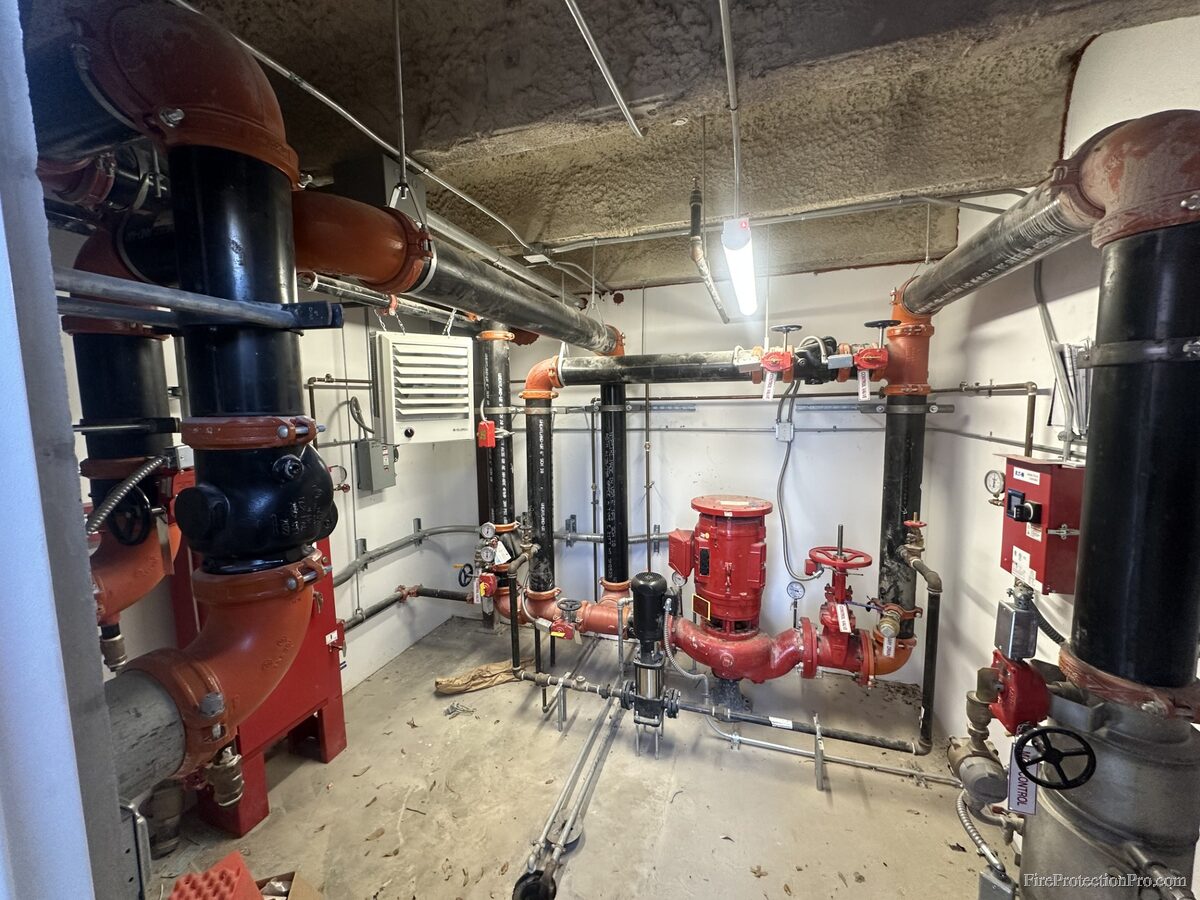
A fire riser is the vertical supply pipe in a standpipe or sprinkler system that carries water from the supply main up through a building to feed hose connections and/or sprinkler branch lines on each floor. The riser typically runs floor-to-floor inside a fire-rated stairwell or dedicated riser shaft, providing a pressurized water supply at every level of the building.
The riser assembly includes the riser pipe itself along with control valves, a check valve, drain connections, pressure gauges, and hose valve connections at each floor landing. In a combined system, a single riser may serve both standpipe hose connections and sprinkler branch lines.
Terminology note: "Fire riser" is a colloquial term used in the field. NFPA 14 uses "standpipe" to refer to the full system — the vertical piping plus all associated valves, connections, and fittings. The two terms are often used interchangeably by building owners and inspectors.
Standpipe System Classes
NFPA 14 defines three classes of standpipe systems based on who will use them and what type of hose connections are provided.
| Class | Hose Connections | Intended Use |
|---|---|---|
| Class I | 2-1/2″ hose valve connections | Fire department use — high-flow connections for attack lines |
| Class II | 1-1/2″ hose stations with hose | Occupant use — pre-connected hose for trained building staff |
| Class III | Both 2-1/2″ and 1-1/2″ connections | Combined fire department and occupant use |
Class I
2-1/2″ hose valve connections
Fire department use — high-flow connections for attack lines
Class II
1-1/2″ hose stations with hose
Occupant use — pre-connected hose for trained building staff
Class III
Both 2-1/2″ and 1-1/2″ connections
Combined fire department and occupant use
Where are standpipes required? Standpipe trigger requirements come from the adopted building code (IBC Section 905, IFC, or NFPA 1) and vary by occupancy, building height, floor level, and floor area. Always verify with the edition adopted by your authority having jurisdiction (AHJ).
Riser Components
A standpipe riser assembly consists of several key components that work together to deliver water from the supply main to hose connections on each floor.
- Riser pipe: Typically 4″ or 6″ Schedule 40 steel, running vertically through a fire-rated stairwell or riser shaft
- Hose valves: 2-1/2″ angle valves at each floor landing (Class I/III) and/or 1-1/2″ hose stations (Class II/III)
- Fire department connection (FDC): Siamese connection at the building exterior allowing engine companies to supplement supply pressure
- Check valve: Prevents backflow from the standpipe into the supply main
- OS&Y control valve: Outside screw and yoke gate valve for system isolation — must be supervised (locked open or electronically monitored)
- Main drain valve: Allows draining the riser for maintenance and provides a test point for water supply adequacy
- Pressure gauge: Installed at the riser base and at the top of the system to monitor static and residual pressures
- Identification signage: Riser number, system type, and coverage area posted at the riser and at the FDC
For a visual walkthrough of riser components and what building owners should know about maintenance, see this fire sprinkler riser guide.
Pressure Requirements
Standpipe systems must deliver adequate pressure at the most remote hose connection while keeping pressures at lower floors within safe limits.
- Minimum residual pressure: 100 psi at the topmost 2-1/2″ hose connection (Class I and Class III systems)
- Maximum static pressure: 175 psi at any hose connection — exceeding this threshold requires pressure-reducing valves (PRVs)
- Class II systems: 65 psi minimum residual at the most remote 1-1/2″ hose connection
In taller buildings where hydrostatic pressure at lower floors exceeds 175 psi, the system must be divided into pressure zones with separate risers or use PRVs at individual hose connections. Zone risers are fed by separate fire pumps or pressure-reducing stations sized for the design flow of each zone.
Installation Requirements
NFPA 14 installation requirements address riser placement, FDC configuration, hydraulic design, and seismic considerations.
- Riser location: Standpipes are typically located in enclosed stairwells per IBC 905.4. Hose connections must be accessible at every floor landing within the stair enclosure.
- FDC placement: Fire department connections must be on the street side of the building, clearly visible, and within the distance limits set by the AHJ. FDCs must be compatible with local fire department couplings.
- Hydraulic calculations: All standpipe systems must be hydraulically calculated to verify that design flow and pressure requirements are met at the most remote hose connection.
- Seismic bracing: Buildings in Seismic Design Category C or higher require seismic bracing of standpipe risers per NFPA 13 seismic requirements (referenced by NFPA 14).
- Combined systems: Where standpipe and sprinkler systems share a common riser, the system must meet the more stringent requirements of both NFPA 13 and NFPA 14.
Inspection & Testing
After acceptance, standpipe systems are inspected, tested, and maintained under NFPA 25. The frequencies and procedures below are general references — always verify against the adopted edition of NFPA 25 and any local amendments.
- Hose connections, valves, and signage: Inspected per NFPA 25 Table 6.1.1.2 at the frequencies specified for each component
- 5-year standpipe flow test: A full flow test at system demand verifies that the system can deliver the required flow and pressure at the most remote hose connection
- Hydrostatic test: Conducted at 200 psi or 50 psi above the maximum operating pressure, whichever is greater, per NFPA 25
- Main drain test: Performed at each riser per NFPA 25 to verify water supply adequacy — static and residual pressures are compared to previous results to detect impairments
- Control valves: Supervised valves must be inspected to confirm they remain in the open position
Edition matters: Always verify testing frequencies against the edition of NFPA 25 adopted by your AHJ. Requirements vary by edition and local amendments. Some jurisdictions have adopted more frequent testing intervals than the base standard.
For a practical inspection checklist that covers quarterly, annual, and five-year items, see this commercial sprinkler inspection checklist for facility managers.
Frequently Asked Questions
What is a fire riser?
A fire riser is the vertical supply pipe that carries water from the building's water supply main up through the structure to feed hose connections (in a standpipe system) or sprinkler branch lines (in a sprinkler system) on each floor. The term is colloquial — NFPA 14 uses "standpipe" for the full system. See the fire riser section for details.
What’s the difference between a standpipe and a sprinkler riser?
A standpipe riser feeds hose connections for manual firefighting (fire department or trained occupants). A sprinkler riser feeds automatic sprinkler heads. In many commercial buildings, a combined system uses a single riser to serve both standpipe hose connections and sprinkler branch lines — this combined system must meet the requirements of both NFPA 13 and NFPA 14.
When is a standpipe system required?
Standpipe requirements are set by the adopted building code, not NFPA 14 itself. Under IBC Section 905, standpipes are generally required in buildings with floors more than 30 feet above or below fire department vehicle access, in covered mall buildings, and in stages. Requirements vary by occupancy, building height, and local amendments — always verify with your AHJ.
What is a fire department connection (FDC)?
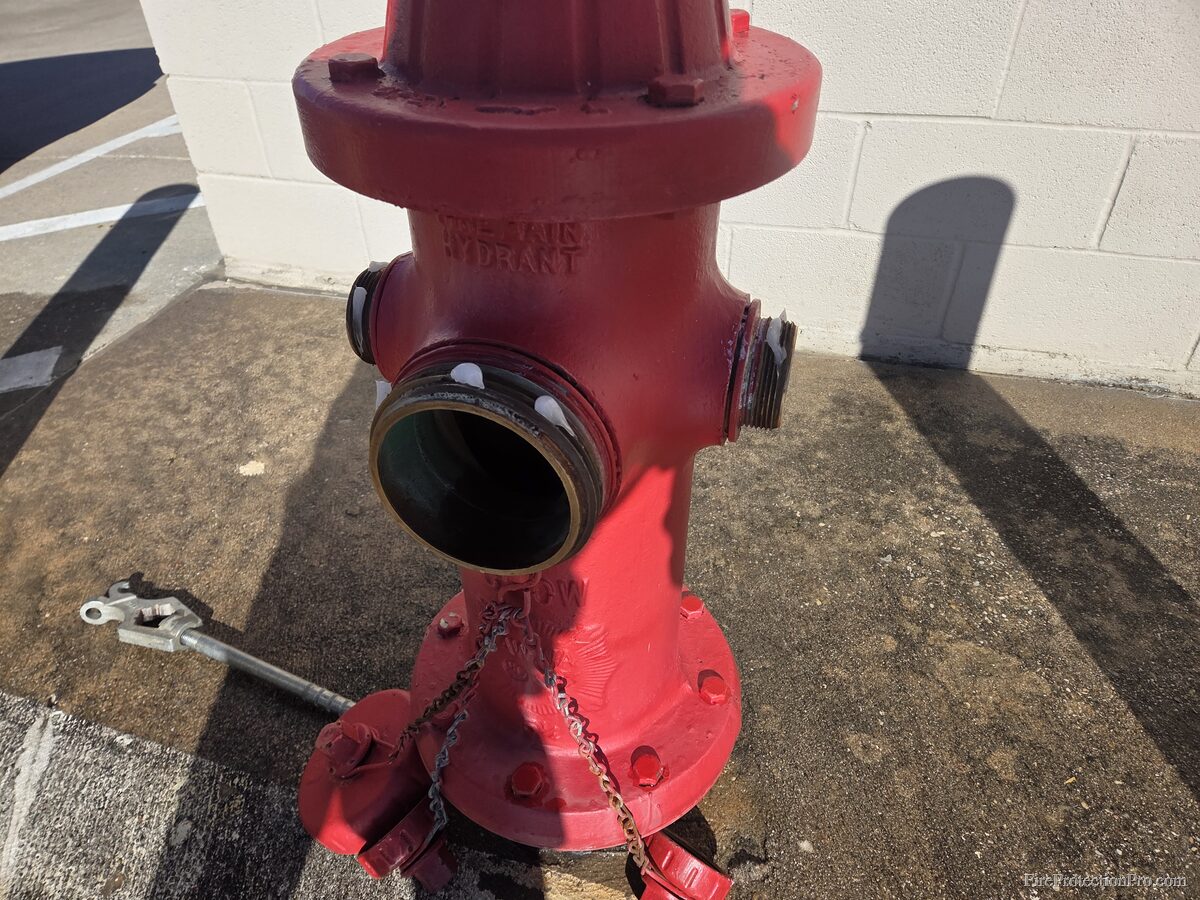
An FDC (also called a siamese connection) is a fitting on the exterior of a building that allows fire department engine companies to pump water into the standpipe or sprinkler system, supplementing the building's own water supply. FDCs must be visible, accessible, and compatible with local fire department couplings.
How often do standpipe systems need testing?
NFPA 25 requires a full standpipe flow test every 5 years at system demand, with more frequent inspections of components like hose connections, control valves, and signage. A main drain test is performed at each riser as part of annual or quarterly inspections depending on the adopted edition. Always verify frequencies against your AHJ's adopted edition of NFPA 25.
Can a combined sprinkler/standpipe system share a riser?
Yes. Combined systems are common in commercial buildings and use a single riser to feed both standpipe hose connections and sprinkler branch lines. The system must be hydraulically calculated to deliver the simultaneous demand of both the sprinkler design area and the standpipe hose connections, and must meet the more stringent requirements of both NFPA 13 and NFPA 14.
What pressure is required at standpipe hose connections?
Class I and Class III systems require a minimum of 100 psi residual pressure at the topmost 2-1/2″ hose connection. No hose connection may exceed 175 psi static pressure — connections exceeding this limit require pressure-reducing valves. See the pressure requirements section for details.
Fire Suppression Products

Manufacturer: Everkem
Everkem Firestop-814+ Intumescent Firestopping Sealant
$137.00
$144.00

Manufacturer: Kidde
Kidde Fire Extinguisher Cabinet Surface Mount KF9723-C
$255.00

Manufacturer: Von Duprin
Von Duprin 299F19 Standard Strike for Fire Rated 22, 88, 98, 99, 9857, 9957, 622 Matte Black Finish
$113.00
Was this page helpful?
Your feedback helps us improve our technical resources.