
Fire Alarm Communicators Guide
POTS sunset timeline, technology comparison, and selection guide for building owners
Last updated: March 15, 2026
Overview
Your fire alarm system is only as reliable as its connection to the monitoring station. If the signal can't get through, your fire alarm is effectively nonfunctional — detectors may activate, but nobody is dispatched. For millions of buildings in the US, that connection still runs over copper POTS (Plain Old Telephone Service) lines that carriers are actively retiring.
This guide covers the communicator technologies available to replace aging POTS-based DACTs (Digital Alarm Communicator Transmitters), what NFPA 72 requires, how costs compare, and how to choose the right communicator for your building.
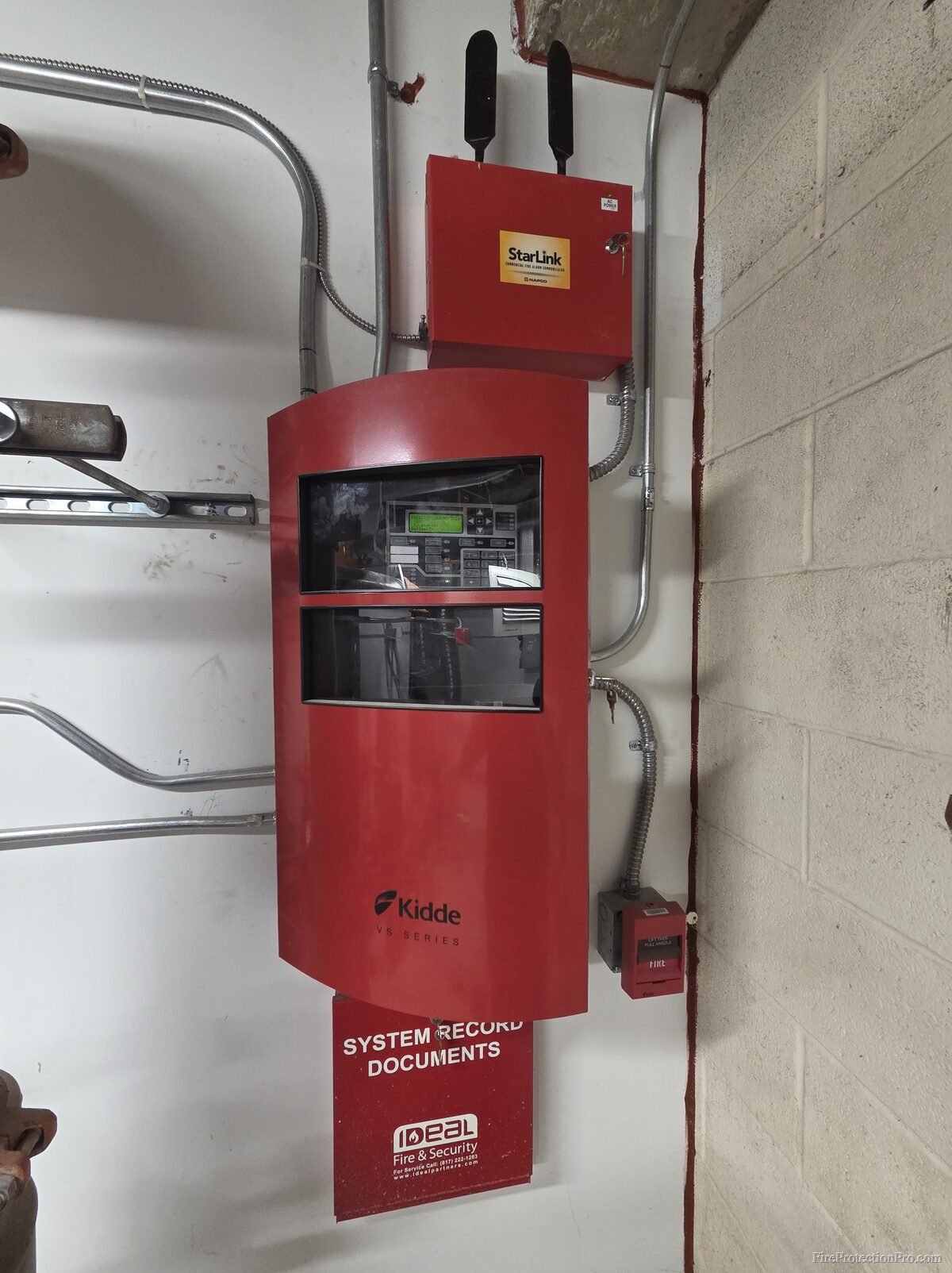
The POTS Line Sunset
What Is Happening
The major US telephone carriers are retiring analog copper telephone lines — the infrastructure that POTS-based fire alarm communicators (DACTs) depend on. This isn't a future possibility; it's happening now. Buildings that don't upgrade will lose their fire alarm monitoring connection when their copper line is decommissioned.
Carrier Timeline
| Carrier | Status |
|---|---|
| AT&T | 1,711 wire centers across 19 states grandfathered. First 500 wire centers decommissioning June 2026. Section 214 filing covers 90,000 customers in 18 states. No new copper orders since Oct 2025. Full retirement target: end of 2029, excluding California. |
| Verizon | Completed $20B Frontier acquisition Jan 20, 2026 (31 states + DC). 63 central offices decommissioned. Shifting 5M+ lines to fiber by 2027. Active copper retirements in NY, NJ, MA, PA, VA, DE, MD. |
| Lumen (CenturyLink) | No new POTS orders since May 1, 2025 across 14 states. Copper retirement notices filed for CO, IA, ND, MN, ID, NM, SD, OR, WA. Utah PSC denied retirement request citing inadequate replacement evidence. |
| Windstream | Earliest major carrier to exit: full POTS shut-off April 2, 2022. |
| FCC | Order 19-72A1 (Aug 2019) removed POTS price caps, costs now $750 to $2,700/month in some areas. Order 25-37 (March 2025) streamlined copper retirement approvals. March 2026 proposed order would grant blanket Section 214(a) authority with 31-day automatic approval. No carve-out for fire alarm POTS lines. |
Caution: POTS line costs have changed
After FCC Order 19-72A1 removed carrier pricing obligations, POTS line costs jumped from $30 to $50/month historically to $750 to $2,700/month in some carrier areas. Even if your copper line is still active, the cost alone may justify an immediate upgrade. Most cellular or MFVN replacements run $35 to $70/month total.
Types of Fire Alarm Communicators
Several communicator technologies are available to replace POTS-based DACTs. Each has different reliability characteristics, cost profiles, and infrastructure requirements.
POTS/DACT (Legacy)
The original fire alarm communicator technology. DACTs transmit alarm signals as Contact ID tones over analog copper telephone lines. NFPA 72 historically required two dedicated phone lines for redundancy.
- Monthly cost: $50-120 per line (two lines typically required)
- Signal delivery: 15-45 seconds
- Declining reliability as copper infrastructure ages
- Being actively retired by all major carriers
Cellular (LTE-M / 5G)
The dominant replacement technology. Cellular communicators transmit alarm signals over commercial LTE-M or 5G networks using a dedicated SIM card. No internet connection or phone line required.
- Monthly cost: $15-25
- Signal delivery: 4-15 seconds
- Works anywhere with cellular coverage
- No dependency on building internet or phone infrastructure
- Carriers offer long-term LTE-M network commitments for IoT/fire alarm use
IP / Internet
IP communicators transmit alarm signals over the building's broadband internet connection. Fastest signal delivery but dependent on internet uptime.
- Monthly cost: $10-20 (uses existing internet)
- Signal delivery: 1-4 seconds (fastest available)
- Requires reliable broadband internet
- Vulnerable to ISP outages and network equipment failure
Dual-Path (Cellular + IP)
The industry-recommended configuration. Dual-path communicators use IP as the primary path for speed, with cellular as automatic failover. If either path fails, the other continues operating independently.
- Monthly cost: $20-40
- Signal delivery: 1-4 seconds (IP primary), 4-15 seconds (cellular backup)
- Automatic failover between paths
- Meets NFPA 72 dual-path supervision requirements
- Recommended for commercial, healthcare, and high-rise buildings
Radio / Mesh (AES-IntelliNet)
AES-IntelliNet uses a private mesh radio network completely independent of telephone, internet, and cellular infrastructure. Each radio unit acts as a repeater, creating redundant signal paths.
- Monthly cost: $20-35
- Independent of all telecom infrastructure
- Self-healing mesh network with multiple signal paths
- Limited geographic availability (major metro areas)
M2M (Machine-to-Machine)
M2M is a service and billing model, not a separate network technology. M2M fire alarm communicators use dedicated IoT SIM cards on LTE-M (Cat-M1) networks optimized for low-bandwidth, high-reliability machine communication. Carriers like AT&T, Verizon, and T-Mobile offer M2M data plans at lower costs than consumer cellular, with longer network lifecycle commitments.
In practice, most cellular fire alarm communicators (Napco StarLink, Telguard, Alula BAT-Fire) already use M2M SIM plans on LTE-M networks. The distinction matters mainly for billing: M2M plans run $1 to $3/month for raw data connectivity, versus $10 to $20 for consumer-style cellular plans. The communicator manufacturer bundles the SIM activation and data plan into their service offering.
POTS Line Replacement (MFVN Devices)
A different approach from dial capture communicators. MFVN (Managed Facilities-Based Voice Network) devices sit at the telephone demarc point and present as a standard phone line. The fire alarm panel sees no change. The device routes signals over LTE cellular to a managed network, then terminates to the PSTN. Traffic does not cross the public internet.
NFPA 72 requires MFVN providers to be regulated communications carriers with 8 hours of standby power at the premises and 24 hours at the central office. This is what separates MFVN devices from consumer VoIP, which does not meet these requirements.
Products in this category include Ooma AirDial (UL 864 certified, FDNY and CSFM listed, approximately $40/month per line with hardware included), DataRemote POTS-in-a-Box (UL 864 certified after initial controversy, CSFM listed), and Granite EPIK (patented alarm protocol relay, dual-SIM with PRI failover). These devices can replace up to 4 to 8 POTS lines per unit, making them cost-effective for buildings with multiple analog devices (fire alarm, elevator phone, fax).
Emerging Technologies
Cloud-connected platforms like Honeywell CLSS (Connected Life Safety Services) add remote diagnostics and system health monitoring on top of alarm communication. Dual-SIM cellular communicators like NAPCO StarLink use two independent carrier SIMs for cellular-only redundancy without requiring internet.
What NOT to Do: Consumer VoIP and ATAs
Building owners sometimes try consumer VoIP adapters as a cheap POTS replacement. This creates serious problems:
VoIP compresses audio using codecs designed for human speech (G.729 and similar). Fire alarm Contact ID signals are not speech. The compression mangles the DTMF tones, and the central station receiver cannot parse the alarm report. Moderate packet jitter that is unnoticeable in a phone call causes complete signal failure for alarm transmission.
A more dangerous failure mode: VoIP adapters can lose their connection to the internet but still output voltage on the phone port. The fire panel sees what looks like an active phone line and does not report a trouble condition. The building has no alarm monitoring but nobody knows it.
Consumer ATAs also operate at lower voltage (as low as 6V off-hook) compared to the 48VDC that POTS provides, which can cause intermittent DACT failures. None of these devices carry UL 864 certification. Alarm monitoring companies explicitly refuse to support magicJack, NetTalk, and similar budget VoIP services for alarm signaling.
| Technology | Reliability | Monthly Cost | Internet Required | Best For |
|---|---|---|---|---|
| POTS/DACT | Declining | $50-120/line | No | Legacy (retiring) |
| Cellular (LTE-M) | High | $15-25 | No | Most buildings |
| M2M / IoT | High | $10-20 | No | OEM / managed service |
| IP / Internet | Medium | $10-20 | Yes | Budget w/ reliable internet |
| Dual-Path | Highest | $20-40 | Yes | Commercial, healthcare, high-rise |
| Radio / Mesh | High | $20-35 | No | No cellular coverage |
| MFVN (Line Replacement) | High | $35-45/line | No | Multi-device buildings |
| Consumer VoIP/ATA | Non-compliant | $0-30 | Yes | Not allowed for fire alarm |
NFPA 72 Chapter 26 Requirements
NFPA 72 Chapter 26 governs supervising station alarm systems — the communication path between your fire alarm panel and the central monitoring station. Key requirements for communicator selection:
- 90-second rule: Alarm signals must be displayed at the supervising station within 90 seconds of activation
- Single communication path: Must be supervised (polled) at least every 60 minutes. Failure must be reported within 200 seconds.
- Dual communication path: Each path supervised every 6 hours. Provides redundancy — if one path fails, the other continues independently.
- Pathway Class C: Cellular and IP communicators operate under Class C, where the pathway is verified by end-to-end check-in signals rather than physical wire monitoring.
- MFVN requirements: Devices that replace the phone line must be maintained by a regulated carrier with 8 hours of standby power at the premises and 24 hours at the central office (Section 26.6.4).
- Cybersecurity (2025 edition): New Chapter 11 makes cybersecurity mandatory. Internet-connected communicators fall under Security Level 3, requiring compliance with UL 2900, ANSI/ISA-62443, or NIST Cybersecurity Framework. Annual access credential review required.
- Latency and jitter (2025 edition): New paragraphs 26.6.11.3 and 26.6.11.4 require communicators to be compatible with the latency and jitter of their network. Any communication failure from latency or jitter must generate a trouble signal at the panel.
- Pre-2013 vs. 2013+: Before the 2013 edition, two POTS lines counted as dual-path. Since 2013, two POTS lines are considered a single technology path.
For full NFPA 72 code reference including smoke detector spacing, notification appliance requirements, and inspection schedules, see our dedicated NFPA 72 resource page.
Cost Comparison
The economics of communicator upgrades are straightforward: POTS lines are expensive and getting more so, while newer technologies cost a fraction per month. Equipment costs are recovered quickly through monthly savings.
| Method | Equipment | Monthly | Annual Total | 5-Year Total |
|---|---|---|---|---|
| Two POTS Lines | $0 (existing) | $100-240 | $1,200-2,880 | $6,000-14,400 |
| Dual-Path (Cell+IP) | $300-500 | $20-40 | $540-980 | $1,600-3,100 |
| Single Cellular | $200-400 | $15-25 | $380-700 | $1,100-1,900 |
| MFVN (Ooma, Granite) | $0 (included) | $35-45/line | $420-540 | $2,100-2,700 |
ROI
Most buildings save $500-2,000 per year by switching from POTS to cellular or dual-path. Equipment typically pays for itself in 6-12 months.
Which Communicator Is Right for Your Building?
Reliable Internet + Cellular Coverage
Dual-path (cellular + IP). Best reliability, meets the highest code requirements, automatic failover between paths.
No Reliable Internet
Dual-SIM cellular. Two independent carrier SIMs provide redundancy without needing a broadband connection.
Budget-Constrained Small Building
Single cellular. Lowest cost, reliable, and code-compliant for most single-path applications.
Healthcare / High-Rise / Critical
Dual-path (mandatory in many jurisdictions). Some AHJs require dual-path for high-rise, healthcare, and assembly occupancies.
Rural / No Cellular Coverage
AES-IntelliNet radio mesh. Works independently of all telecom infrastructure. Check geographic availability.
Questions to Ask Your Fire Alarm Contractor
- What type of communicator does my panel currently use?
- Is my current communicator compatible with a cellular or IP module?
- Does my jurisdiction require dual-path communication?
- What is the cellular signal strength in my panel room?
- Which central station will monitor the new communicator?
- Will the upgrade require a fire alarm permit or inspection?
- How long will the system be offline during the switchover?
- What is the total cost including equipment, installation, and first-year monitoring?
Need Help Evaluating Your Fire Alarm Monitoring Setup?
Our sister site fireprotectionpro.com publishes a detailed guide covering monitoring station selection, dispatch workflows, and vendor coordination for commercial fire alarm systems.
Read the Fire Alarm Monitoring GuideKey Brands & Models
The fire alarm communicator market is served by a handful of established manufacturers. Most offer universal models that work with any fire alarm panel, plus panel-specific options for their own ecosystems.
| Brand / Model | Type | Universal | Multi-Carrier | Approx. Cost |
|---|---|---|---|---|
| Napco StarLink MAX2 | Dual-path IP + cellular | Yes | Yes (AT&T + Verizon) | $228 to $298 |
| Honeywell LTE-CFA/CFV | Dual-path IP + cellular | No (VISTA only) | No | $367 to $550 |
| DMP DualComNF | Dual-path network + cellular | Yes | No | Dealer pricing |
| Telguard TG-7FE | Dual-path IP + 5G LTE-M | Yes | No | Approx. $435 |
| Alula BAT-Fire | Dual-path IP + 5G LTE-M | Yes (12V + 24V) | No | $275 to $287 |
| M2M Services MQ03-Fire | Dual-path LAN + LTE-M | Yes | Yes (AT&T + VZ or AT&T + TMo) | Approx. $194 (w/ 1yr svc) |
| Ooma AirDial | MFVN line replacement | Yes (demarc device) | Yes (TMo, ATT, VZ, USCell) | Approx. $40/mo (hardware incl.) |
| AES IntelliNet | Private mesh radio | Yes | N/A (private network) | $20 to $35/mo |
What to Expect During a POTS-to-Cellular Upgrade
A POTS-to-cellular communicator upgrade is one of the most straightforward fire alarm projects. Most upgrades are completed in a single technician visit. Here's what the process looks like:
- 1. Assessment — Your contractor tests cellular signal strength at the fire alarm panel location, confirms panel compatibility with the new communicator, and checks internet availability if dual-path is needed.
- 2. Equipment Selection — Based on panel make/model, building requirements, and AHJ preferences, the contractor selects the appropriate communicator module.
- 3. Central Station Coordination — The monitoring account is set up or migrated at the central station before installation. The new communicator's ID is registered.
- 4. Installation — The communicator module is mounted in or adjacent to the fire alarm panel, connected to the panel's communicator terminals, and powered up. Typical time: 1-2 hours.
- 5. Testing — The technician sends test signals to the central station to verify alarm, trouble, and supervisory signals are received correctly. Supervision polling is confirmed.
- 6. POTS Line Cancellation — Only after the new communicator is verified and operational. Never cancel POTS lines before the replacement is tested and confirmed with the central station.
Timeline: Most upgrades are completed in a single visit (2-4 hours on site). Plan 2-4 weeks total when including assessment, equipment ordering, central station setup, and scheduling.
Frequently Asked Questions
Can I use my VoIP phone line for fire alarm monitoring?
No. VoIP degrades and corrupts the Contact ID tones that traditional DACTs use to transmit signals. Even when signals appear to go through, they may be garbled or delayed beyond the 90-second NFPA 72 requirement. VoIP is not a code-compliant replacement for POTS.
How do I know if my building uses POTS for fire alarm?
Check your fire alarm panel. If you see two telephone-style RJ31X jacks with copper wires running to the panel, you likely have a POTS-based DACT. Your fire alarm contractor or monitoring company can confirm what type of communicator you're using.
Will my fire alarm still work if the internet goes down?
If you have a cellular or dual-path communicator, yes. Cellular communicators operate independently of your internet connection. Dual-path communicators automatically fail over from IP to cellular when internet is lost. An IP-only communicator will lose its connection during internet outages.
Do I need a permit to upgrade my fire alarm communicator?
It depends on your jurisdiction. Many AHJs consider a communicator swap a like-for-like replacement that doesn't require a permit. Others require a fire alarm permit for any modification to a monitored system. Your fire alarm contractor will know the local requirements.
What happens if I do nothing and my POTS line is disconnected?
Your fire alarm panel will go into a communication trouble condition. The panel will sound a trouble buzzer and the monitoring station will stop receiving signals. Your building will have no off-premises fire alarm monitoring. This may also trigger fire code violations at your next inspection.
How much does a POTS-to-cellular upgrade cost?
Equipment costs range from $200-500 depending on whether you need single cellular or dual-path. Installation is typically $150-300 for labor. First-year total (equipment + installation + monitoring) runs $500-1,000, compared to $1,200-2,880 per year for two POTS lines.
What is an MFVN device and how is it different from VoIP?
An MFVN (Managed Facilities-Based Voice Network) device replaces the phone line at the demarc point. The fire panel does not know anything changed. MFVN devices route signals over cellular to a managed carrier network, not the public internet. They are maintained by a regulated carrier and include battery backup. Consumer VoIP runs over unmanaged internet with no backup power and does not meet NFPA 72 requirements.
Fire Alarm Products

Manufacturer: JL Industries
Cato Surface Mount Fire Alarm Pull Station Cover Clear 220-S
$36.00

Manufacturer: JL Industries
Surface Mount Secured Fire Alarm Cover Break Bar 220-SB
$38.00

Manufacturer: Norton Rixson
Rixson 998M689 Wall Mounted Electromagnetic Holder Aluminum Finish
$449.00
$766.84

Manufacturer: Schlage Electronics
Schlage Electronic 900FA Fire Alarm Relay Module
$80.00
$96.00
Was this page helpful?
Your feedback helps us improve our technical resources.