
First Aid & Fire Safety Requirements by Industry
Mapping OSHA, DOT, FAA, USCG, and FRA requirements so you buy the right kit the first time
Overview
Different industries have different first aid and fire safety regulations. ANSI Z308.1 is the baseline workplace first aid kit standard, but DOT, FAA, USCG, and OSHA impose industry-specific requirements that go beyond or differ from the ANSI minimum. A kit that passes muster in a warehouse may not satisfy the regulations governing your fleet vehicles, aircraft, or vessels.
This guide maps first aid and fire safety requirements by industry so facility managers and safety officers can identify exactly which standards apply to their operation. Each section covers the primary regulation, kit contents, fire extinguisher class, and special equipment that industry requires. One piece of that equipment recurs across many of these industries — the AED; for where it is required and how to mount its wall cabinet, see the AED requirements and cabinet placement guide.
Jump to your industry
Find your operation below for the standards, kit contents, and fire extinguisher types that apply — portable and wheeled.
Ground Fleet & CMV
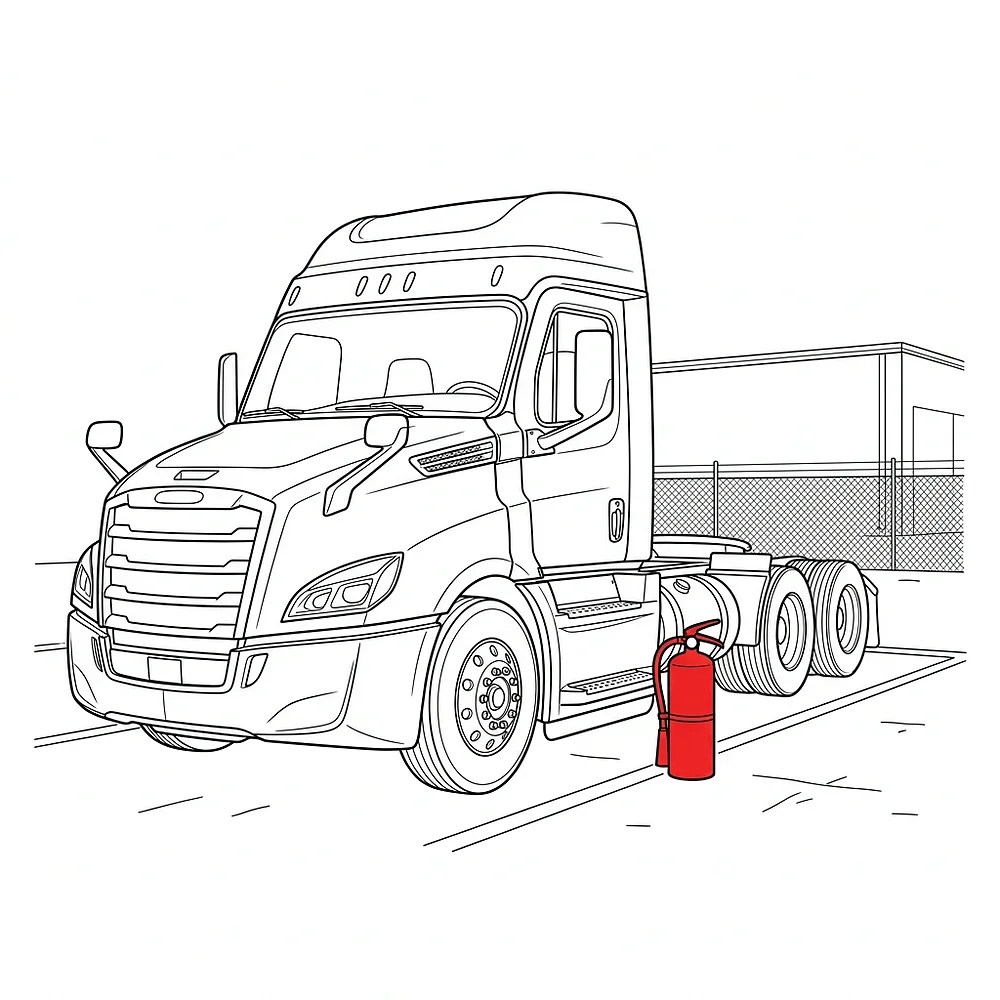
Commercial motor vehicles (CMVs) operating on public highways fall under FMCSA and DOT regulations. Fire extinguisher requirements are federally mandated, while first aid kit requirements vary by state and carrier policy.
Fire Extinguisher Requirements (49 CFR 393.95)
Every power unit must carry at least one properly charged fire extinguisher under 49 CFR §393.95. The regulation specifies minimum UL ratings based on vehicle type and cargo. Vehicles hauling hazardous materials require higher-rated extinguishers under 49 CFR 397 driving rules, and carriers typically stage a hazmat spill kit for road releases.
- Minimum 5 B:C rating (or two 4 B:C extinguishers) for most CMVs
- Placarded hazmat loads require 10 B:C minimum
- Must be securely mounted, readily accessible, and inspected annually
- Drivers must know location and how to operate the extinguisher
- Failed or missing extinguishers are an out-of-service violation
First Aid Kits
There is no single federal mandate requiring first aid kits on all CMVs, but ANSI Z308.1 kits are recommended by FMCSA and required by some states and many carrier safety programs. Passenger-carrying vehicles have stricter requirements under 49 CFR 393.76.
- ANSI Z308.1 Type I kit covers most CMV needs
- Some states (California, New York) mandate onboard first aid kits
- FMCSA CSA scoring: no direct first aid kit violation, but medical readiness supports safety record
- Carriers running OSHA-covered operations at loading docks also need facility kits per 1910.151
For detailed fire extinguisher specs and inspection checklists, see our DOT Fire Extinguisher Requirements guide and the Fleet DOT Compliance guide. For warning-triangle requirements and California fleets (≥26,001 lb GVWR), see our California BIT inspection guide.
Aviation & Charter
Aviation first aid and fire safety requirements come from the FAA and apply to both the aircraft itself and the ground facilities (hangars, FBOs, maintenance shops). Companies like Textron that operate across aviation manufacturing, charter operations, and ground support must comply with multiple overlapping standards.
Aircraft Emergency Equipment (14 CFR 91.513)
Aircraft with 10 or more passenger seats must carry specific emergency equipment. The regulation covers fire extinguishers, crash axes or crowbars, and first aid kits scaled to passenger capacity.
- Minimum one hand fire extinguisher in pilot compartment
- Additional extinguishers in passenger compartment based on seating capacity
- Halon 1211 alternatives increasingly required (halon production phased out)
- First aid kit contents specified by FAA Advisory Circular
- Emergency equipment must be inspected at regular maintenance intervals
Halotron Clean-Agent Extinguishers — the Halon 1211 Replacement
Residue-free, non-conductive clean agent for the cockpit and cabin, from a compact 2.5 lb unit up to 15.5 lb. Halotron I is a modern clean-agent replacement path for legacy Halon 1211. Made in the USA.

2.5 lb
UL 2-B:C
Manufacturer: Buckeye
Buckeye 2.5 lb Halotron Clean Agent Fire Extinguisher
$275.00

5 lb
UL 5-B:C
Manufacturer: Buckeye
Buckeye 5 lb Halotron Clean Agent Fire Extinguisher
$515.00

11 lb
UL 1-A:10-B:C
Manufacturer: Buckeye
Buckeye 11 lb Halotron Clean Agent Fire Extinguisher
$1,109.00

15.5 lb
UL 2-A:10-B:C
Manufacturer: Buckeye
Buckeye 15.5 lb Halotron Clean Agent Fire Extinguisher
$1,513.00
For owner-flown aircraft, flight schools, and aviation maintenance shops, see the dedicated Halotron Fire Extinguishers for Private Aircraft.
Charter & Air Taxi (14 CFR Part 135.177)
Part 135 operators (charter, air taxi, commuter) have enhanced first aid kit requirements beyond Part 91. Kit contents are more comprehensive and must be checked before each flight or at defined intervals.
- Enhanced first aid kit with additional medications and supplies
- Emergency medical kit required on aircraft with flight attendants
- AED recommended on larger charter aircraft (not universally mandated)
- Crew training on first aid kit contents and use is required
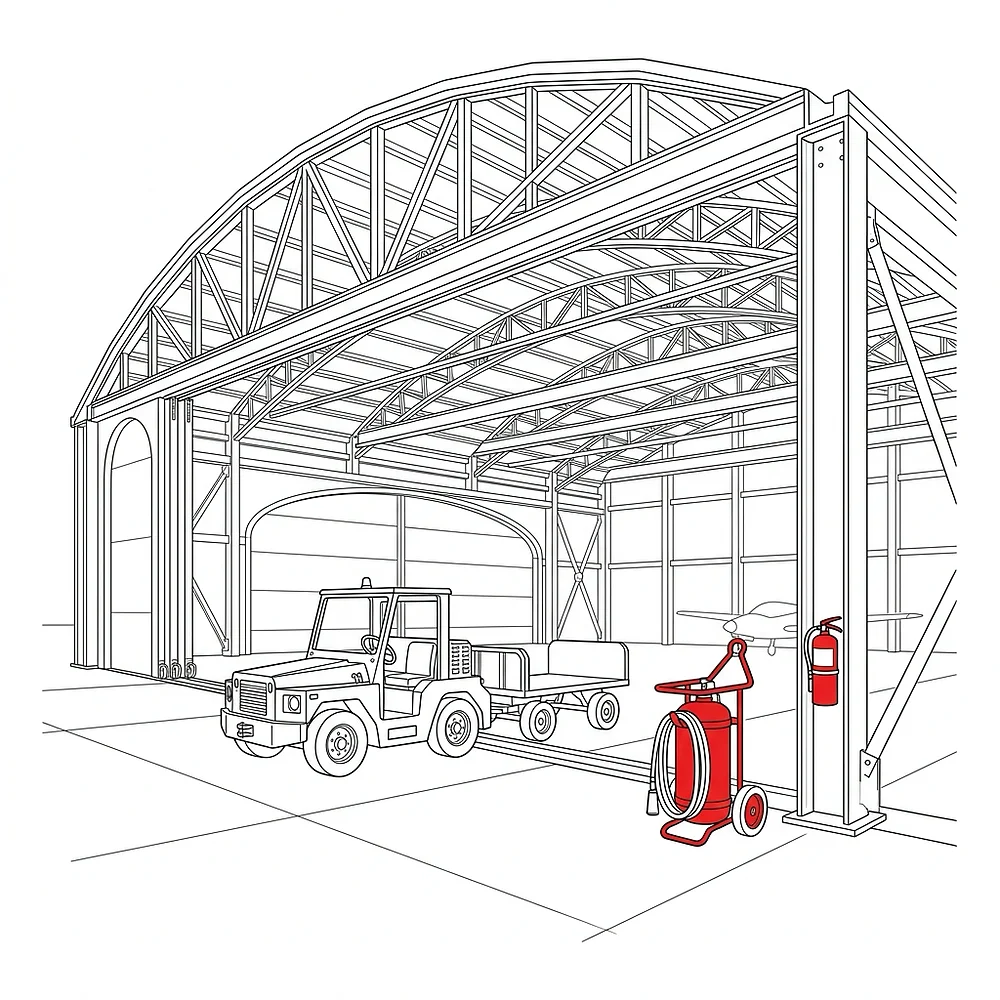
Hangars and Ground Facilities
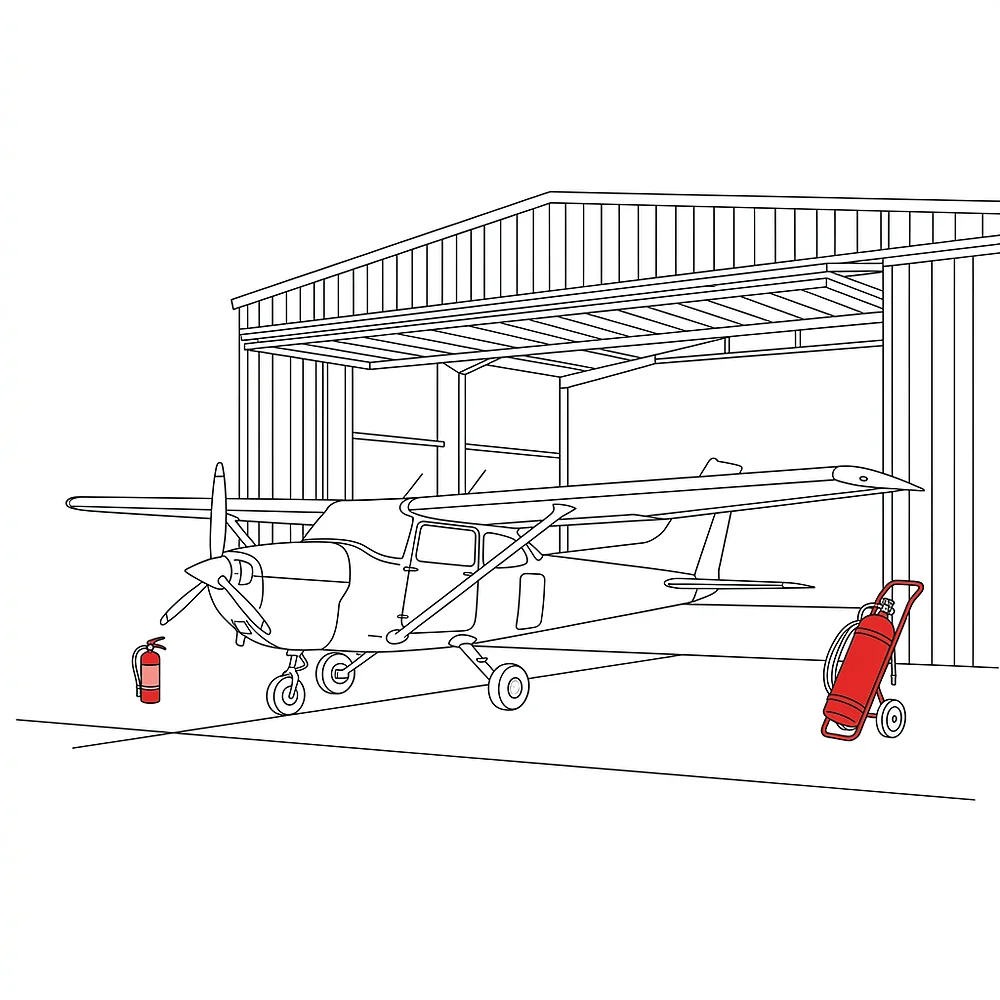
Aircraft hangars and FBOs fall under NFPA 409 (Standard on Aircraft Hangars) for fire protection — including foam suppression under NFPA 11 foam systems — and OSHA 1910.151 for ground crew first aid. Jet fuel handling areas require Class B fire extinguishers and specific spill containment, with fuel-servicing placement set by NFPA 407; portable extinguishers facility-wide follow OSHA 1910.157.
- NFPA 409 governs fire protection systems, extinguisher placement, and fire suppression in hangars
- OSHA 1910.151 applies to all ground crew and maintenance personnel
- Class B extinguishers for fuel handling areas (flammable liquids)
- Eye wash stations required where chemicals (hydraulic fluid, solvents) are used
- Aviation manufacturing facilities also fall under OSHA 1910.157 for portable fire extinguisher standards
Purple K for Fuel & Hangar Fires
Potassium-bicarbonate dry chemical rated B:C — the strongest Class B dry agent and the one specified for aviation and fuel handling. Available as a 10 lb handheld and 50 lb / 125 lb wheeled units for hangar and apron coverage; wheeled units ship by LTL freight.

125 lb
UL 320-B:C
Manufacturer: Buckeye
Buckeye 125 lb Purple K Wheeled Fire Extinguisher 320-B:C
$3,154.00

50 lb
UL 160-B:C
Manufacturer: Buckeye
Buckeye 50 lb Purple K Wheeled Fire Extinguisher 160-B:C
$2,146.00

30 lb
UL 160-B:C
Manufacturer: Buckeye
Buckeye 30 lb Purple K BC Fire Extinguisher, Wall Hook, UL Listed 160-B:C, Part 12805
$579.00

Recommended in this guide
Buckeye 11 lb Halotron Clean Agent Fire Extinguisher
Maritime & Shipyard
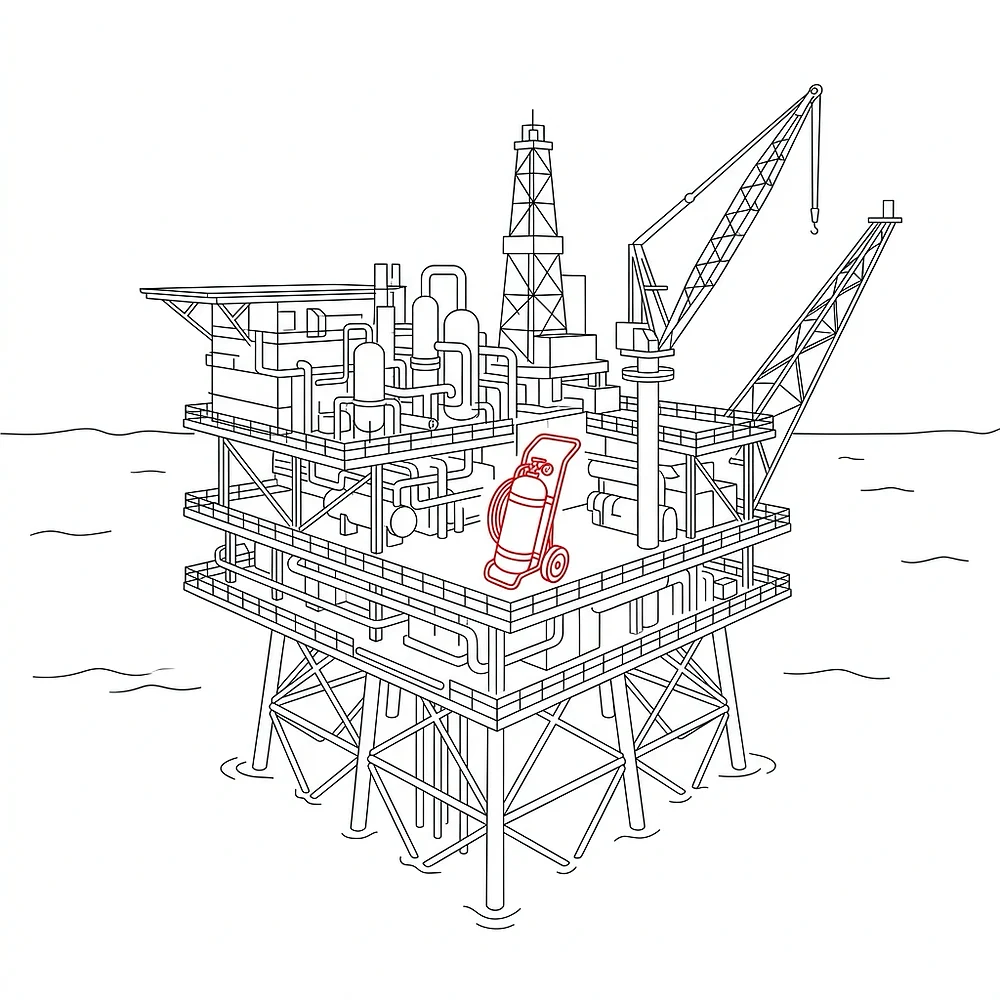
Maritime operations are governed by both OSHA (shipyard employment) and the U.S. Coast Guard (vessel safety). Shore-side facilities follow standard OSHA general industry rules, while vessels and shipyard operations have specialized requirements for the marine environment.
Shipyard Employment (OSHA 1915.87)
OSHA 1915.87 sets first aid requirements for shipyard employment, including shipbuilding, ship repair, and ship breaking operations. The standard requires employers to ensure prompt first aid availability and addresses the unique hazards of working on and around vessels, including permit-required confined spaces under OSHA 1910.146.
- First aid kits must be readily accessible in each work area
- Kit contents must be appropriate to the hazards present (welding burns, fall injuries, confined space rescue)
- At least one person with valid first aid training per work shift
- If no medical facility is within reasonable distance, a trained first aid provider must be on site
Vessel Requirements (USCG)
The U.S. Coast Guard requires first aid kits and fire extinguishing equipment — selected and maintained per NFPA 10 — on inspected and uninspected vessels. Requirements scale with vessel size, passenger capacity, and voyage type.
- Portable fire extinguishers required based on vessel length and type (46 CFR 132)
- Marine-rated extinguishers must meet UL marine listing requirements
- First aid kits scaled to crew size; passenger vessels need larger kits
- Cold water operations require hypothermia treatment supplies
- Immersion suits and water rescue equipment for offshore and near-coastal voyages
Special Maritime Considerations
- Hypothermia kits: thermal blankets, hot packs, dry clothing for cold water rescue
- Waterproof kit enclosures: marine environment demands sealed, corrosion-resistant containers
- Remote location planning: vessels far from shore need enhanced trauma supplies and a medical officer or designated first aid provider
- Drills: USCG requires documented emergency drills including first aid response
For the recreational and commercial water side of this vertical, see our marine facilities fire extinguisher guide and the boatyards & dry-stack storage guide. Marina extinguisher placement itself is set by NFPA 303 (Fire Protection for Marinas and Boatyards).
Manufacturing & Industrial
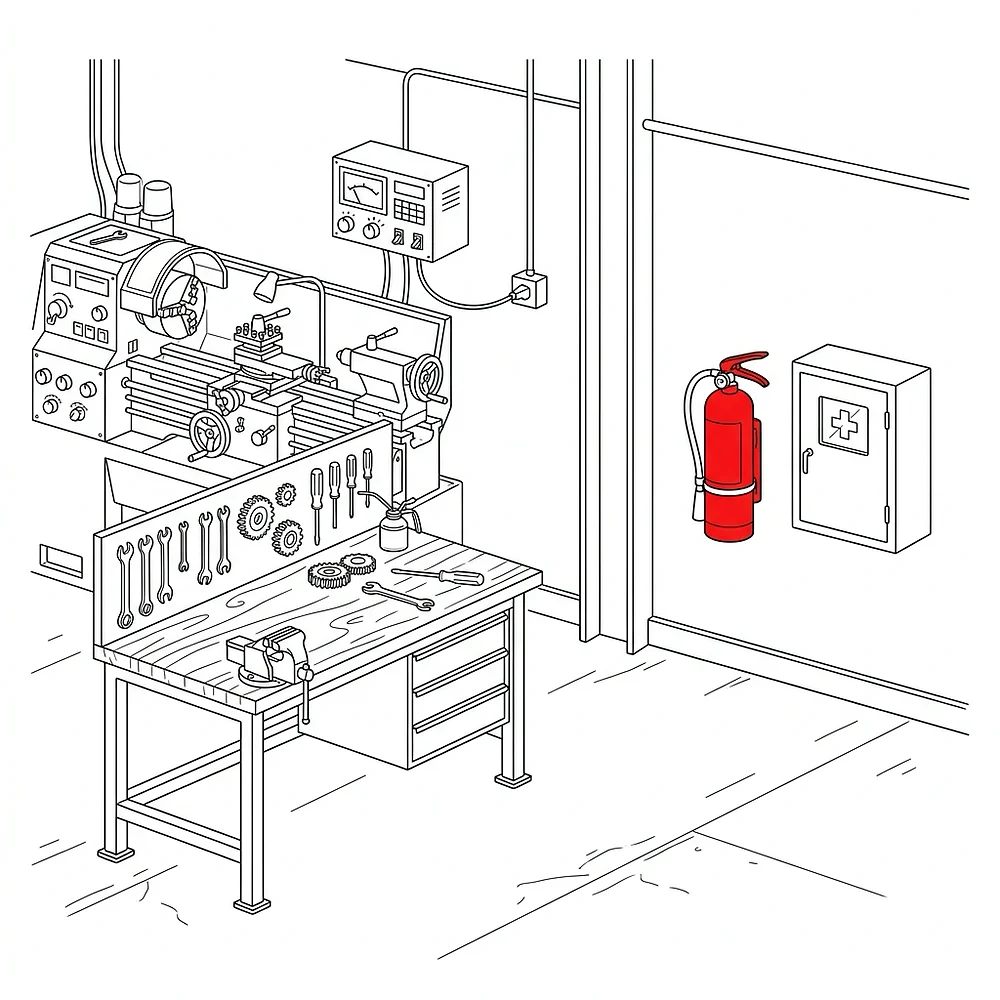
Manufacturing facilities are regulated by OSHA general industry standards. OSHA 1910.151 requires employers to ensure the ready availability of first aid, and ANSI Z308.1 is the referenced standard for first aid kit contents. Fire extinguisher requirements fall under OSHA 1910.157.
First Aid (OSHA 1910.151 + ANSI Z308.1)
Every manufacturing facility must have first aid supplies appropriate to the hazards present. When a hospital or clinic is not in near proximity, a person trained in first aid must be available at the worksite. Where corrosive materials are handled, ANSI Z358.1 eyewash stations and drench showers are required.
- ANSI Z308.1 Type I (16-unit) kit is the minimum for most facilities
- Type II, III, or IV kits for larger workforces or higher-hazard environments
- Eye wash and drench showers required where corrosive materials are used (1910.151(c))
- Kit inspection and restocking at regular intervals
Fire Extinguishers (OSHA 1910.157)
OSHA 1910.157 requires portable fire extinguishers in the workplace unless the employer has an established fire brigade or evacuation-only policy. The correct extinguisher class depends on the materials present. Bulk flammable-liquid storage is separately governed by NFPA 30 flammable liquid storage, and solvents and paints belong in a flammable storage cabinet.
- Class A: ordinary combustibles (wood, paper, textiles)
- Class B: flammable liquids (solvents, fuels, paints)
- Class C: energized electrical equipment
- Class D: combustible metals (magnesium, titanium, lithium)
- Maximum travel distance: 75 feet to Class A, 50 feet to Class B extinguishers
Sector-Specific Requirements
- Aerospace composites: burn kits and chemical exposure kits for epoxy resins and carbon fiber dust
- Automotive manufacturing: Class B extinguishers near paint booths; Class D where aluminum or magnesium is machined
- Metalworking and foundries: Class D extinguishers for combustible metal hazards (magnesium chips, titanium dust)
- Chemical processing: emergency showers, spill kits, and HazMat-specific first aid supplies
- Food manufacturing: Class K extinguishers near commercial cooking equipment
Process-Industry Facilities
Several process industries layer a specific consensus standard or federal rule on top of the general OSHA baseline. We publish a dedicated guide for each:
- Food processing facilities — Class K for cooking lines and the Class K extinguisher guide
- Biogas & RNG facilities — methane/H2S hazard classification and Class B coverage
- Wastewater treatment plants — NFPA 820 hazardous-area classification
- Grain handling facilities — OSHA 1910.272 and NFPA 660 combustible-dust rules
Data Center, IT & Telecom
Data centers, network operations centers, and telecommunications sites are a distinct vertical because the hazard is energized electronics — the priority is an agent that stops the fire without destroying the equipment it is protecting. Two NFPA standards address the space by facility type: NFPA 75 covers information technology equipment rooms and data centers, while NFPA 76 covers telecommunications facilities. Like most NFPA standards, they carry legal force where a jurisdiction adopts them or a contract requires them.
Portable Extinguishers & Agent Choice
For the electronics, use a portable listed for energized electrical equipment (Class C) — NFPA 75 specifies the permitted residue-free agents (CO2 or a clean agent) and defers their maintenance to NFPA 10, while NFPA 76 defers to NFPA 10 for selection and placement. Both keep dry chemical out of equipment areas because its residue is corrosive to electronics. Ordinary combustibles in the room still call for Class A coverage, so a single extinguisher is rarely sufficient on its own. Our sensitive-electronics extinguisher guide weighs CO2 against Halotron for occupied and confined rooms — CO2 displaces oxygen, so it is a poor fit for a small staffed space without ventilation — and fixed clean-agent flooding follows NFPA 2001.
Communication & Tower Sites
Remote radio, broadcast, and cell sites are addressed by NFPA 76 and, in public-safety radio builds where it is contractually required, by the Motorola R56 site standard, which calls for a general-purpose ABC unit plus a 7 to 10 lb Class BC CO2 or equivalent clean-agent unit for the electronic equipment room. Our communication tower site guide covers the equipment shelter, generator, and the NFPA 10 service cycle for unmanned sites.
Support-Area Hazards
Beyond the racks, data-center support areas carry hazards that need their own equipment and procedures:
- Support-area safety overview — first aid, signage, and extinguisher coverage across the white space
- Arc-flash PPE — NFPA 70E protection on the electrical plant
- Lockout/tagout procedures — energy control during maintenance
- Liquid-cooling spill response — coolant containment in liquid-cooled halls
Facilities & Site Operations
Some operations are defined by the site rather than a single federal agency. Each mixes OSHA duties for any employees with the locally adopted fire code (usually the IFC pointing to NFPA 10 for extinguisher selection and placement) and site-specific hazards. We publish a dedicated guide for the most common:
- Construction sites — OSHA 1926 fire protection, hot-work exposure, and flammable storage
- Self-storage facilities — coverage across long corridors and drive-up units
- Campgrounds & RV parks — camp stores, cook shelters, and fuel or propane points
- Marinas and boatyards — covered in Maritime & Shipyard above
Defense & Government
Defense contractors and federal facilities must comply with OSHA general industry standards plus additional military specifications. MIL-STD-882E governs system safety across the Department of Defense, and facilities handling ordnance or explosives have unique first aid and fire suppression requirements.
OSHA Applicability
OSHA applies to all federal contractors performing work in the United States. Contractor-operated facilities on military installations must meet the same OSHA 1910.151 first aid and 1910.157 fire extinguisher standards as any private-sector employer.
MIL-STD-882E System Safety
MIL-STD-882E establishes the DoD system safety process. It requires hazard analysis, risk assessment, and mitigation throughout the system lifecycle. First aid and fire safety equipment are part of the residual risk controls when engineering controls do not eliminate all hazards.
- Hazard severity and probability drive the level of first aid and fire protection required
- Safety critical items must be identified and tracked
- Emergency response plans are part of the system safety program
- Contractual requirement: prime contractors flow down safety requirements to subcontractors
Ordnance & Explosives Handling
Facilities handling ordnance, ammunition, or explosives face the most stringent safety requirements in the defense sector. Blast injury kits and specialized fire suppression equipment are standard.
- Blast injury kits: tourniquets, hemostatic agents, chest seals, and pressure bandages
- Class D extinguishers for facilities handling pyrotechnic metals
- Specialized suppression systems for magazines and storage areas
- ITAR facility access constraints: emergency equipment must be accessible without compromising controlled access zones
- Pre-positioned trauma kits at entry/exit points and in designated safe areas
Beyond OSHA: domestic-content rules for defense procurement
Defense contractors and federal facilities also face domestic-content requirements that vary by contract type. The Buy America Compliance Guide walks the decision tree (which law applies, deadlines, documentation, False Claims Act exposure). For direct federal procurement (the default for most defense contracts), see the Buy American Act; commercial-off-the-shelf items bought off a GSA schedule fall under the Trade Agreements Act instead. For DoD-specific items — clothing, textiles, hand tools, tourniquets, and blast-injury kits — the Berry Amendment requires 100% domestic content. Berry overrides BAA on covered items.
Government buyers and defense contractors sourcing extinguishers against a National Stock Number can cross-reference verified NSNs to in-stock, US-made units in our buying fire extinguishers by NSN guide.
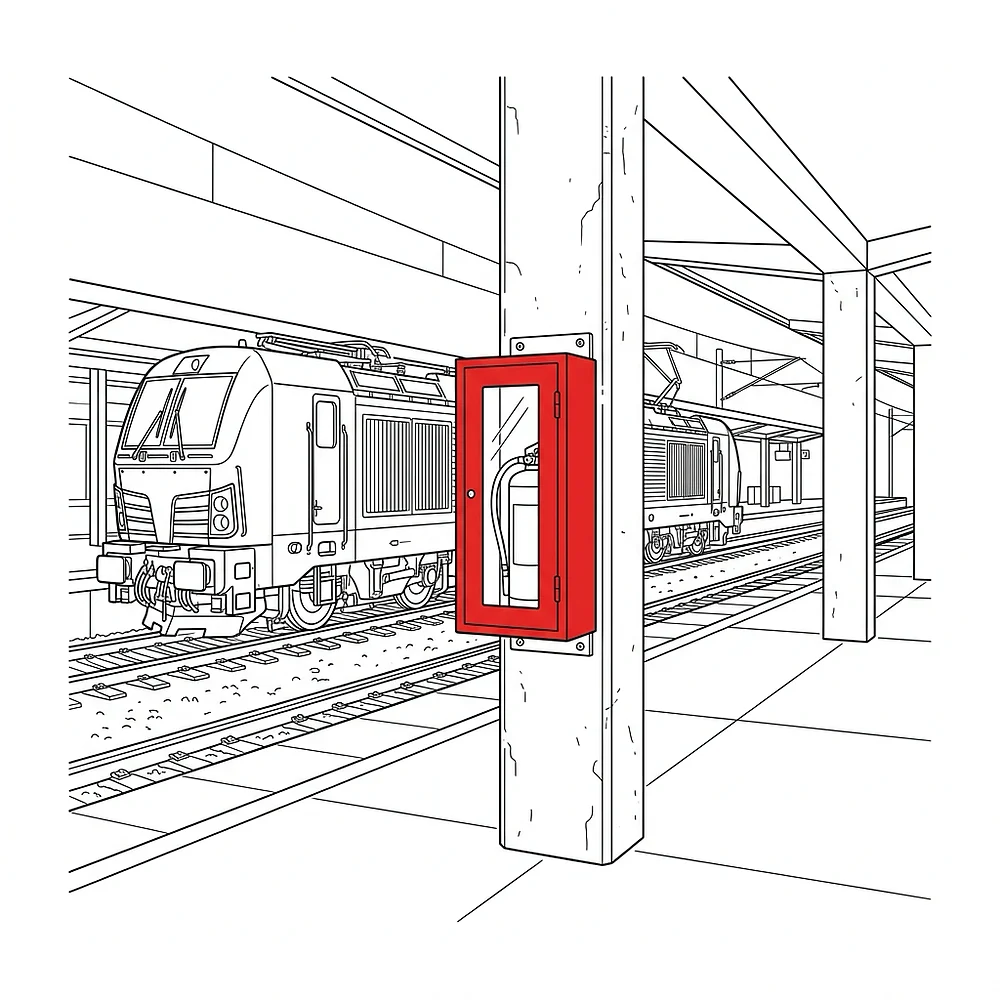
Rail & Transit
Railroads and transit agencies are regulated by the Federal Railroad Administration (FRA) under 49 CFR. Emergency preparedness requirements cover both fixed facilities (stations, maintenance yards) and rolling stock (locomotives, passenger cars, transit vehicles).
FRA Emergency Preparedness (49 CFR Part 239)
49 CFR Part 239 requires railroads that operate passenger service to adopt and comply with emergency preparedness plans. These plans must address first aid equipment, fire safety, and crew emergency training. AEDs are increasingly carried on passenger rail — see the AED requirements guide for placement and cabinet mounting.
- First aid kits required on passenger trains, scaled to seating capacity
- AEDs increasingly required on passenger rail (Amtrak, commuter rail)
- Emergency tools: pry bars, window-breaking devices, flashlights
- Crew must be trained on first aid kit location, contents, and basic use
- Emergency exits and evacuation procedures must account for mobility-impaired passengers
Locomotive Requirements
Locomotives must carry fire extinguishers — selected and inspected per NFPA 10 — and first aid kits as part of FRA safety standards. 49 CFR Part 219 addresses alcohol and drug testing for safety-sensitive positions, which intersects with emergency response capability.
- Portable fire extinguishers required in locomotive cab
- First aid kit accessible to crew in operating compartment
- Extinguisher type: ABC-rated for general locomotive hazards (diesel fuel, electrical, combustibles)
- Monthly inspection of fire extinguishers and first aid supplies
Transit Vehicle Fire Suppression
Urban transit vehicles (buses, light rail, subway cars) present unique fire risks from electrical systems, brake systems, and engine compartments. NFPA 130 (Standard for Fixed Guideway Transit and Passenger Rail Systems) governs fire protection.
- Automatic fire detection and suppression in engine compartments
- Portable extinguishers accessible to the operator
- Interior materials must meet fire performance standards for flame spread and smoke generation
- Emergency ventilation systems in underground transit stations
Choosing the Right Kit
The table below summarizes the primary regulation, kit standard, fire extinguisher class, and special items for each industry. Use it as a starting point, then review the detailed section for your specific operation.
| Industry | Primary Regulation | Kit Standard | Extinguisher Class | Special Items |
|---|---|---|---|---|
| Ground Fleet / CMV | 49 CFR 393.95 | ANSI Z308.1 (recommended) | 5 B:C minimum | Reflective triangles, HazMat placards |
| Aviation / Charter | 14 CFR 91.513 / 135.177 | FAA-specified contents | Halon alternative (cabin), B:C (hangar) | Crash axe, PBE, enhanced medical kit |
| Maritime / Shipyard | OSHA 1915.87, 46 CFR 132 | OSHA + USCG-specified | UL marine-listed (A, B, C) | Hypothermia supplies, immersion suits |
| Manufacturing | OSHA 1910.151 / 1910.157 | ANSI Z308.1 | A, B, C, D (by hazard) | Eye wash, chemical burn kits, Class D for metals |
| Data Center / IT / Telecom | NFPA 75, NFPA 76 | ANSI Z308.1 | Class A + CO2 / clean agent (C) | No dry chemical near electronics; arc-flash PPE |
| Facilities / Site Ops | OSHA 1926 (construction); IFC + NFPA 10 (other sites) | ANSI Z308.1 | ABC (by area) | Hot work, propane/fuel, remote coverage |
| Defense / Government | OSHA + MIL-STD-882E | ANSI Z308.1 + blast trauma | A, B, C, D (by hazard) | Tourniquets, hemostatic agents, chest seals |
| Rail / Transit | 49 CFR 239, NFPA 130 | FRA-specified + AED | ABC (locomotive), auto-suppression (engine) | Window breakers, evacuation tools, AED |
Many companies span multiple categories. A company like Textron operates across aviation manufacturing (OSHA 1910), charter fleet operations (FAA Part 135), defense contracting (MIL-STD-882E), vehicle assembly (OSHA 1910.157), and ground support (NFPA 409). Each operational area needs its own compliance assessment rather than a single blanket approach.
Frequently Asked Questions
What first aid kit do I need for a private jet or charter aircraft?
Aircraft with 10 or more passenger seats must carry a first aid kit meeting FAA requirements under 14 CFR 91.513. Charter operators under Part 135 have enhanced kit requirements specified in 14 CFR 135.177, which include additional medications and supplies beyond the standard Part 91 kit. Smaller private aircraft are not federally required to carry a first aid kit, but carrying an ANSI Z308.1 kit is strongly recommended.
Does OSHA 1910.151 apply to aviation facilities?
Yes. OSHA 1910.151 applies to all ground-based employees, including hangar workers, maintenance technicians, FBO staff, and manufacturing personnel. The FAA regulates what goes on the aircraft; OSHA regulates the workplace where employees service and build aircraft. A facility that manufactures and operates aircraft must comply with both sets of requirements.
What fire extinguisher class do I need for my industry?
It depends on the materials present. Class A covers ordinary combustibles. Class B covers flammable liquids (fuel, solvents). Class C covers energized electrical equipment. Class D covers combustible metals like magnesium and titanium. Most workplaces need at least ABC-rated extinguishers. Metalworking and aerospace manufacturing may also need Class D. Aircraft cabins use halon alternatives. Marine vessels need UL marine-listed units.
Do defense contractors have different first aid requirements?
Defense contractors must meet the same OSHA requirements as any employer, plus additional requirements from MIL-STD-882E system safety and contract-specific safety provisions. Facilities handling ordnance or explosives need specialized blast injury kits with tourniquets, hemostatic agents, and chest seals. ITAR access restrictions also affect how and where emergency equipment is positioned.
What safety equipment does an airport ground support equipment shop need?
A GSE maintenance shop at an airport falls under OSHA general industry standards (1910) for the shop itself, plus airport authority requirements for ramp-side operations. At minimum you need: ANSI Z308.1 first aid kits in the shop and on service vehicles, ABC fire extinguishers per OSHA 1910.157 (plus B:C rated units near fuel and hydraulic fluid areas), hearing protection for ramp work near running aircraft, high-visibility vests for anyone working on the ramp, safety glasses, chemical-resistant gloves for hydraulic fluid and deicing chemicals, and spill kits for hydraulic fluid and fuel. If your shop services lithium battery equipment, you also need a Class D extinguisher or lithium-rated suppression agent accessible.
Can one first aid kit standard cover multiple industries?
ANSI Z308.1 is the closest thing to a universal baseline. It satisfies OSHA 1910.151 requirements and is widely accepted across manufacturing, general industry, and as a recommended standard for fleet vehicles. However, aviation, maritime, defense, and rail each have additional requirements that go beyond ANSI Z308.1. Start with ANSI as the foundation and supplement with industry-specific items based on the regulations that apply to your operation.
What fire extinguisher belongs in a data center or telecom equipment room?
Use a unit listed for energized electrical equipment (Class C) that leaves no residue — CO2 or a clean agent such as Halotron — for the electronics, and keep a Class A-rated unit for the ordinary combustibles in the room; one extinguisher is rarely sufficient by itself. Dry chemical is kept away from signal-processing, main distribution frame, and power areas because its residue corrodes electronics. NFPA 75 (IT equipment) specifies the permitted agents and defers their maintenance to NFPA 10, while NFPA 76 (telecommunications) defers to NFPA 10 for selection and placement. CO2 displaces oxygen, so it is a poor choice for a small, occupied room without ventilation — weigh it against a clean agent and defer the final selection to the site hazard assessment and your AHJ. Public-safety radio and cell sites also follow the Motorola R56 site standard where it is contractually required, which calls for a general ABC unit plus a 7 to 10 lb Class BC CO2 or equivalent clean-agent unit in the equipment room.
Do construction sites and self-storage facilities have fire extinguisher requirements?
Yes. Construction sites fall under OSHA 1926, which requires portable fire extinguishers throughout the site based on protected area and travel distance, with added coverage for hot work and flammable-liquid storage. Self-storage properties, campgrounds, and RV parks are governed by the locally adopted fire code (usually the IFC pointing to NFPA 10 for selection and placement) plus OSHA duties for any on-site employees, with coverage sized to long corridors, camp stores, and fuel or propane points.
Was this page helpful?
Your feedback helps us improve our technical resources.