
ISO 7010
Graphical Symbols for Safety Colors and Safety Signs
Overview
ISO 7010 is the international standard for safety signs used in accident prevention, fire protection, health hazard information, and emergency evacuation. Published by the International Organization for Standardization, it defines a system of graphical symbols that works across languages so the same sign means the same thing whether it is posted in a factory in Ohio or a warehouse in Hamburg.
The current edition (ISO 7010:2019, with amendments through 2024) contains over 200 registered symbols across five categories. Each symbol has a reference number (for example, P002 for "No smoking" or E001 for "Emergency exit left") so specifiers, architects, and safety managers can call out exact signs in plans and compliance documents.
Recent additions (2020–2024 amendments)
- W027 Optical radiation (laser), W036 Crushing (telehandler/lift)
- M017 Wear face shield
- E010 AED location
- Water safety symbols (W066 series)
- Lithium-ion battery warnings
Note: In the United States, OSHA does not mandate ISO 7010 directly. Most U.S. workplaces follow ANSI Z535. However, multinational facilities, export products, and sites with a non-English-speaking workforce increasingly adopt ISO 7010 signs alongside or in place of ANSI signage. See the ISO 7010 vs ANSI Z535 comparison below.
Sign Categories & Examples
ISO 7010 organizes every registered symbol into one of five series. The series letter, shape, and background color are fixed so workers can recognize the type of message before they even read the pictogram.
Images below are illustrative examples. Always source signs from a certified manufacturer to ensure compliance with ISO 3864 colorimetric and dimensional requirements.
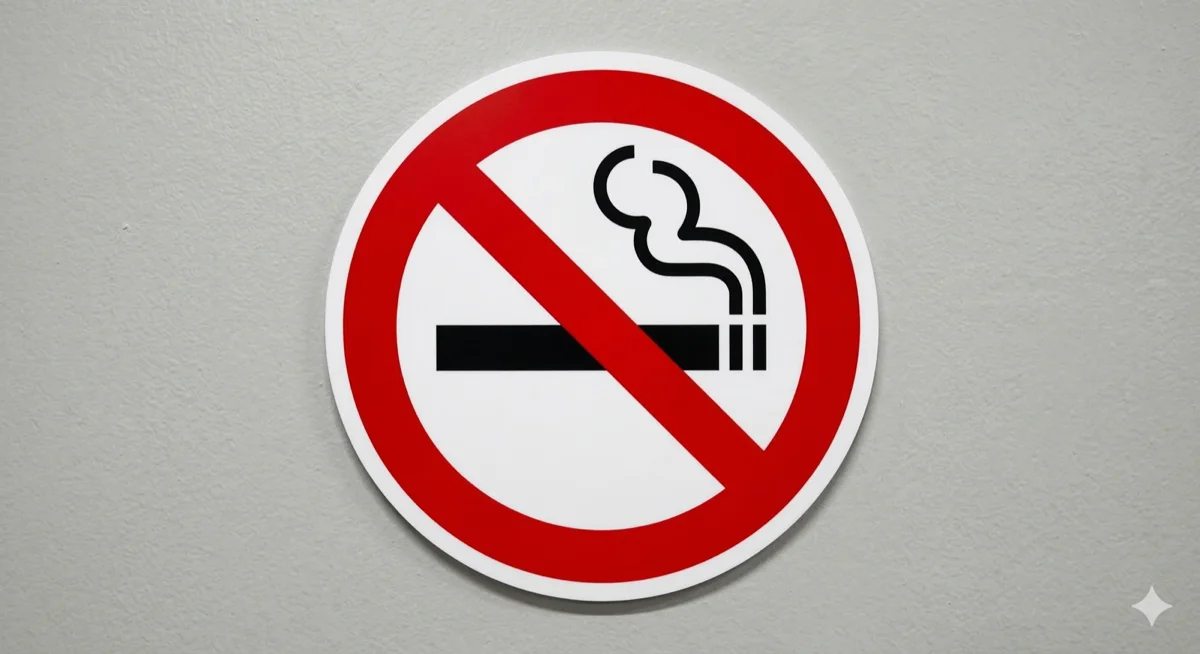
Prohibition Signs (P-Series)
Prohibition signs command "Do Not." ISO 3864-1 requires a round shape, a white background, and a thick red circle with a diagonal bar covering at least 35% of the sign area. The red elements always go over the black pictogram, providing high contrast and instant recognition that the action is forbidden.
Common signs: P002 No smoking, P003 No open flame, P006 No access for pedestrians, P010 Do not touch. See the complete P-series guide
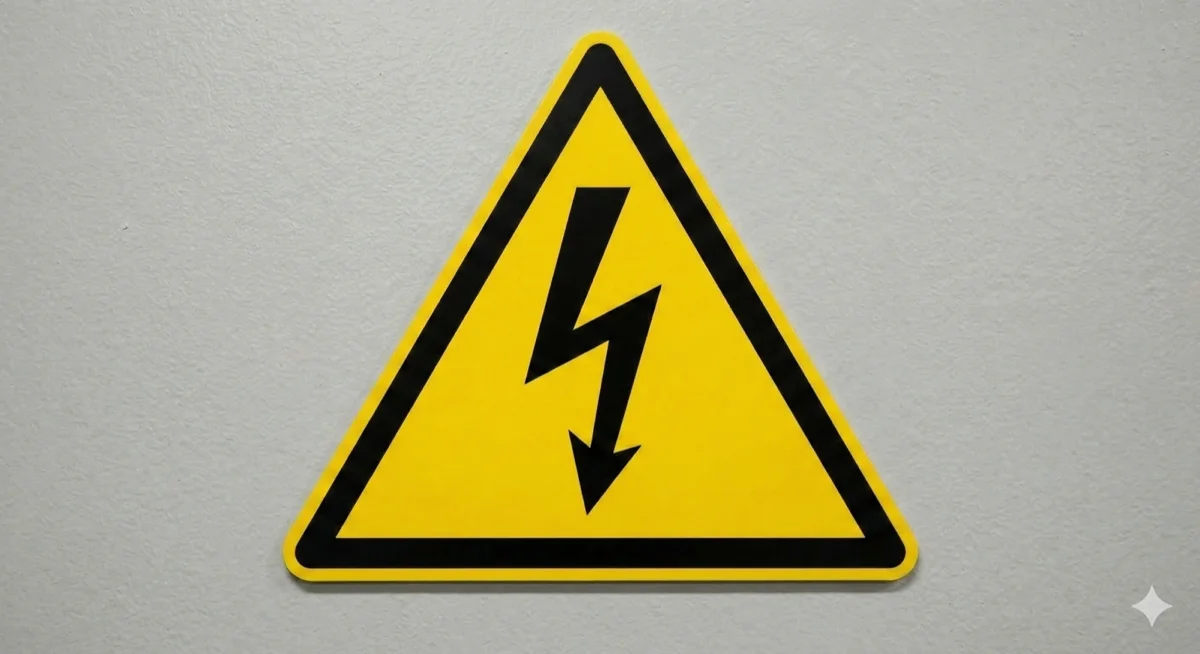
Warning Signs (W-Series)
Warning signs indicate a specific hazard or danger. They use a triangular shape and a vibrant yellow background (at least 50% of the sign area) framed by a black border, with a black hazard pictogram centered inside. The triangle + yellow + black combination always alerts workers to potential danger.
Common signs: W001 General warning, W012 Electrical hazard, W017 Hot surface, W028 Slippery surface. See the complete W-series guide
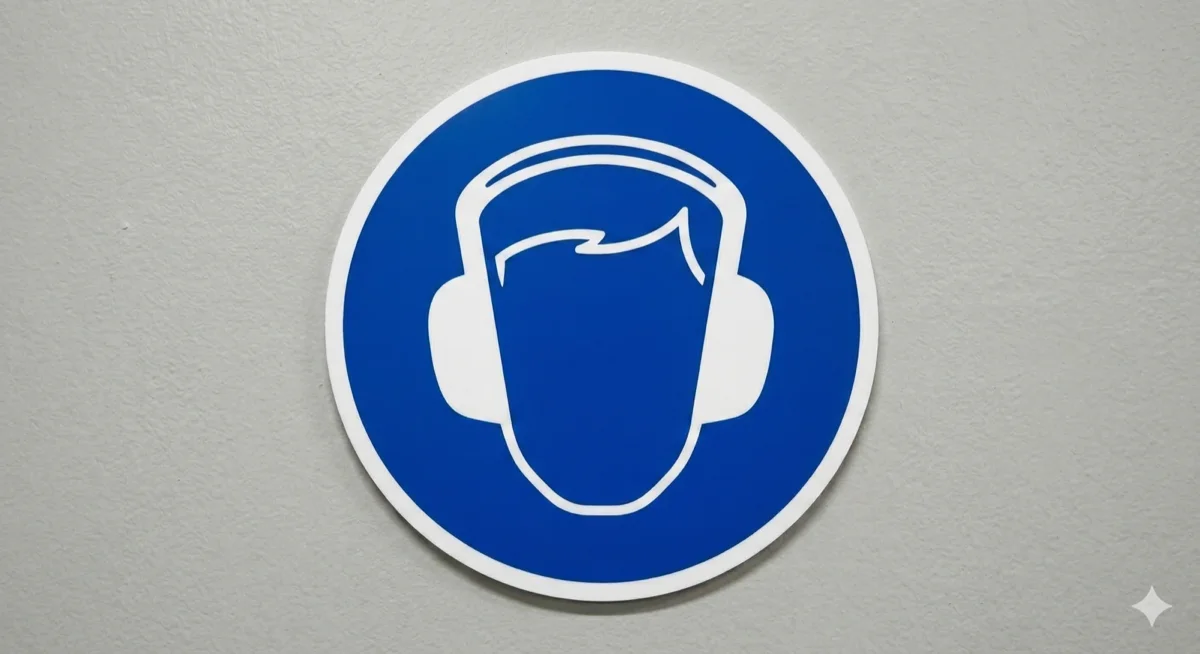
Mandatory Action Signs (M-Series)
Mandatory signs dictate a required action such as wearing PPE. They use a circular shape with a solid blue background covering at least 50% of the sign. The pictogram detailing the required action is always rendered in white against the blue, making the message clear and immediate.
Common signs: M004 Eye protection, M003 Ear protection, M014 Head protection, M017 Respiratory protection. See the complete M-series guide
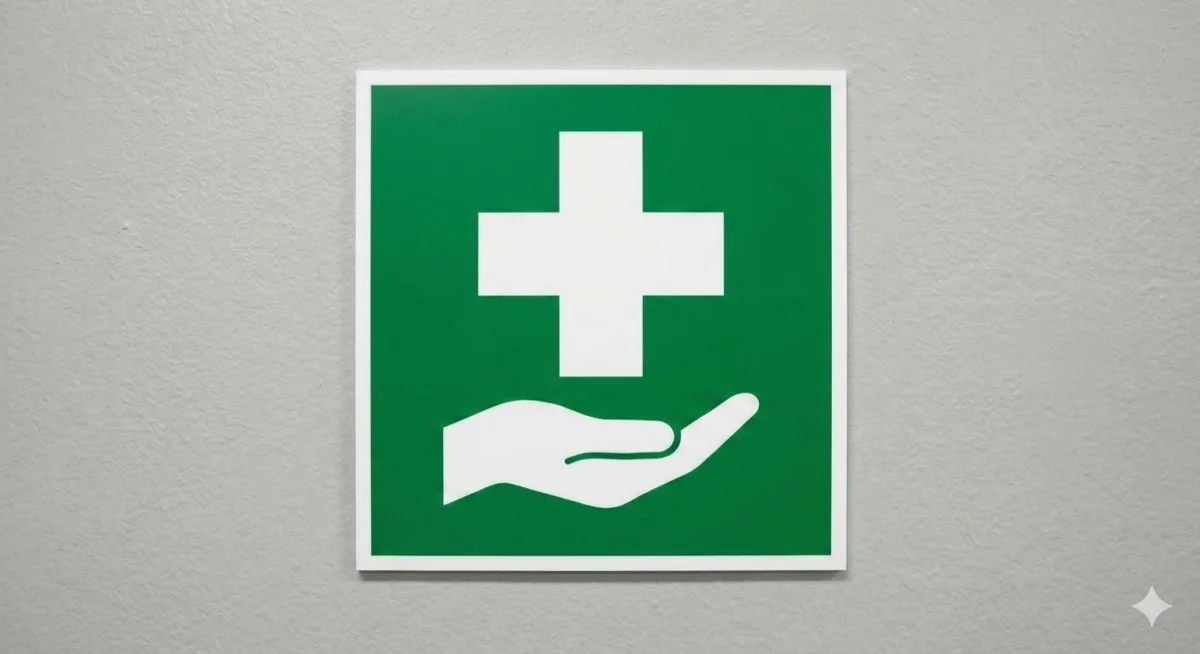
Emergency and First Aid Signs (E-Series)
Emergency signs must be identifiable even in chaotic or low-visibility situations. They are always square or rectangular (never round or triangular) with a green background and white pictograms. The green color scheme (safe condition) is completely distinct from prohibition (red), warning (yellow), and mandatory (blue) signs.
Common signs: E001/E002 Emergency exit, E003 First aid, E009 Emergency shower, E007 Assembly point. See the complete E-series guide
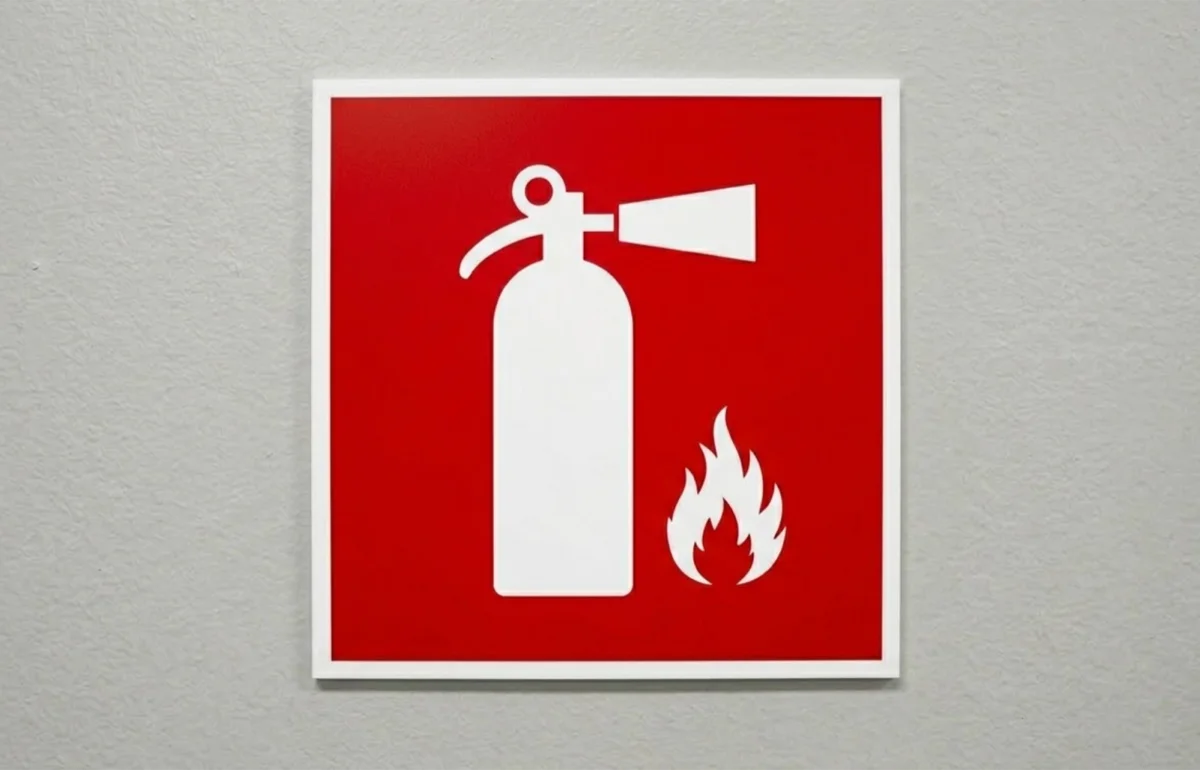
Fire Equipment Signs (F-Series)
Fire equipment signs locate firefighting gear that must be found instantly during an emergency. Like emergency signs, these are square or rectangular, but they use a red background with white pictograms. While the background color is red (like prohibition signs), the square shape is the critical differentiator.
Common signs: F001 Fire extinguisher, F002 Fire hose reel, F003 Fire ladder, F005 Fire alarm call point. See the complete F-series guide
Color Coding System
ISO 7010 ties each safety color to ISO 3864-4 colorimetric values. The Pantone references below are the closest textile matches commonly specified when ordering signs. Always confirm the exact CIE coordinates with your sign manufacturer if you are producing custom signs.
| Color | Meaning | Application | Pantone Reference |
|---|---|---|---|
| Red | Prohibition / Fire equipment | Stop, do not, fire equipment location | Pantone 485 C |
| Yellow | Warning / Caution | Hazards, dangerous conditions | Pantone 109 C |
| Blue | Mandatory action | Required PPE, required behavior | Pantone 300 C |
| Green | Safe condition / Emergency | Exits, first aid, safety equipment | Pantone 3415 C |
| White | Contrast color | Background on prohibition signs, symbols on mandatory/fire/exit signs | N/A |
| Black | Contrast color | Symbols on warning signs, border on prohibition/warning signs | N/A |
Viewing Distance and Sign Sizing
ISO 3864-1 provides a formula for minimum sign height based on viewing distance:
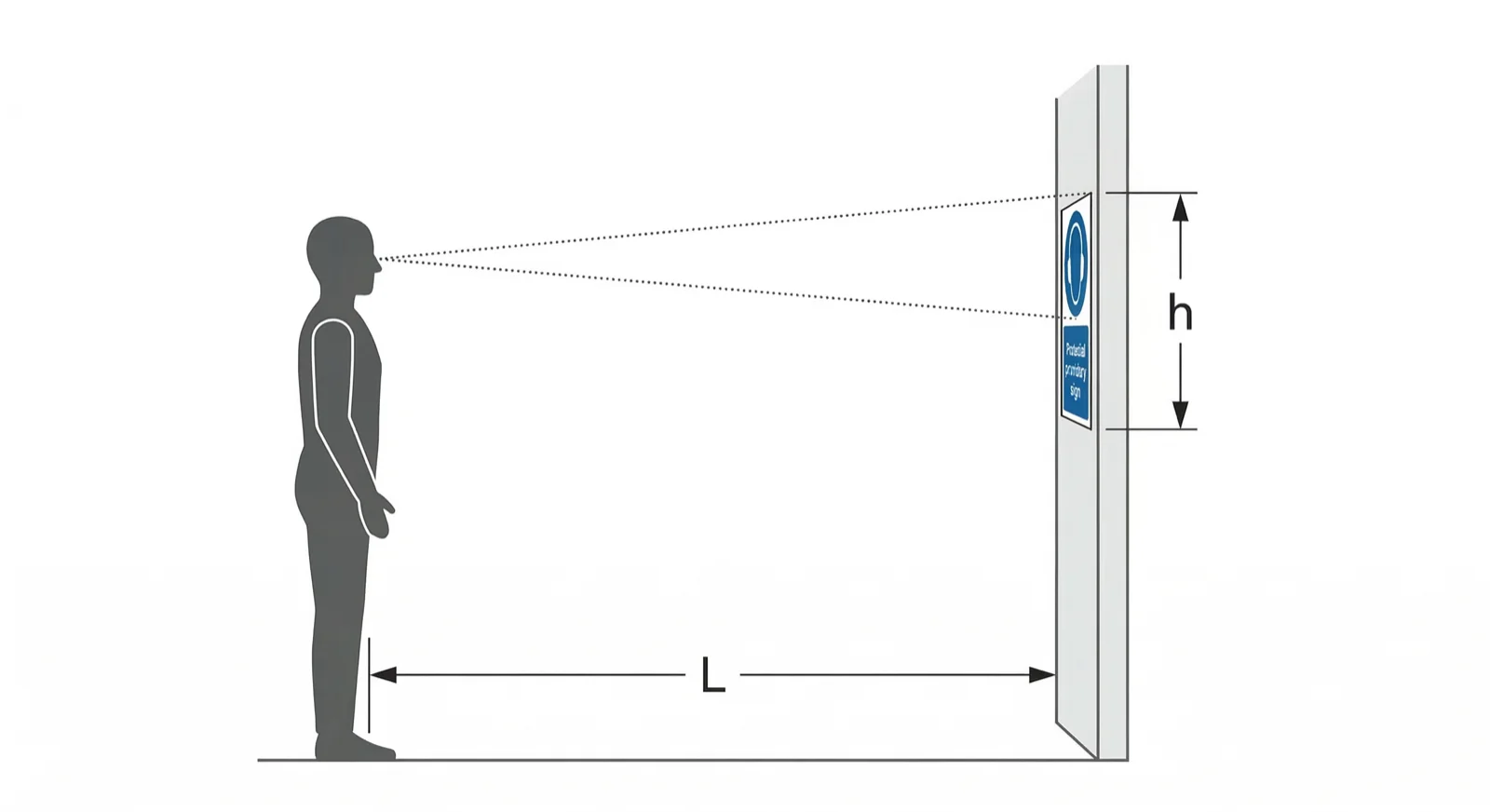
Viewing distance (L) determines minimum sign height (h) using the formula h = L / Z
Sizing formula
h = L / Z, where h is the height of the sign, L is the viewing distance, and Z is a distance factor. For internally lit signs Z = 200. For externally lit signs Z = 100. For signs in poor or emergency lighting Z = 50.
Sign sizing calculator
Viewing distance
Lighting condition
The table below gives practical minimum sizes for common viewing distances in a typical workplace with normal overhead lighting. Round up to the next standard sign size available from your supplier.
| Viewing Distance | Normal Lighting (Z=100) | Poor Lighting (Z=50) | Typical Use |
|---|---|---|---|
| 4 m (13 ft) | 40 mm (1.6 in) | 80 mm (3.1 in) | Equipment labels, small rooms |
| 8 m (26 ft) | 80 mm (3.1 in) | 160 mm (6.3 in) | Corridors, doorways |
| 12 m (39 ft) | 120 mm (4.7 in) | 240 mm (9.4 in) | Open office areas |
| 16 m (52 ft) | 160 mm (6.3 in) | 320 mm (12.6 in) | Warehouses, shop floors |
| 24 m (79 ft) | 240 mm (9.4 in) | 480 mm (18.9 in) | Large industrial halls |
| 32 m (105 ft) | 320 mm (12.6 in) | 640 mm (25.2 in) | Loading docks, parking structures |
These sizes refer to the height of the safety sign itself (the circle for prohibition/mandatory, the triangle edge for warning, or the rectangle height for escape/fire). If you add supplementary text below the sign, size the pictogram first and then add the text panel.
Design Specifications
ISO 7010 symbols follow strict geometry and proportion rules defined in ISO 3864-1 and ISO 3864-3. These rules exist so that signs from different manufacturers look the same once posted.
- Shapes: Circle for prohibition and mandatory. Equilateral triangle for warning. Rectangle or square for escape, first aid, and fire equipment.
- Color area ratios: The safety color (red, yellow, blue, green) must cover at least 50% of the total sign area for warning, mandatory, escape, and fire signs. For prohibition signs, the red band and bar must cover at least 35%.
- Borders: Warning triangles carry a black border. Prohibition circles carry a red border and red diagonal bar at 45 degrees from upper left to lower right.
- Pictograms: Each registered symbol has a grid drawing in the ISO 7010 annex. Manufacturers must reproduce the pictogram within the specified proportions. Freehand or "creative" interpretations are not permitted.
- Material durability: Signs must withstand the environment where they are installed. Outdoor signs typically require UV-resistant inks and corrosion-resistant substrates (aluminum, stainless steel, or treated plastic). Photoluminescent materials are required in locations that rely on emergency lighting.
- Supplementary text: Supplementary text can be added below the symbol on a separate panel, but the graphical symbol must always be able to stand on its own.
ISO 7010 vs ANSI Z535
In the U.S. market, safety managers often need to choose between ISO 7010 and ANSI Z535 signage (or use both). The two systems serve the same goal but differ in format, legal standing, and how they handle text.
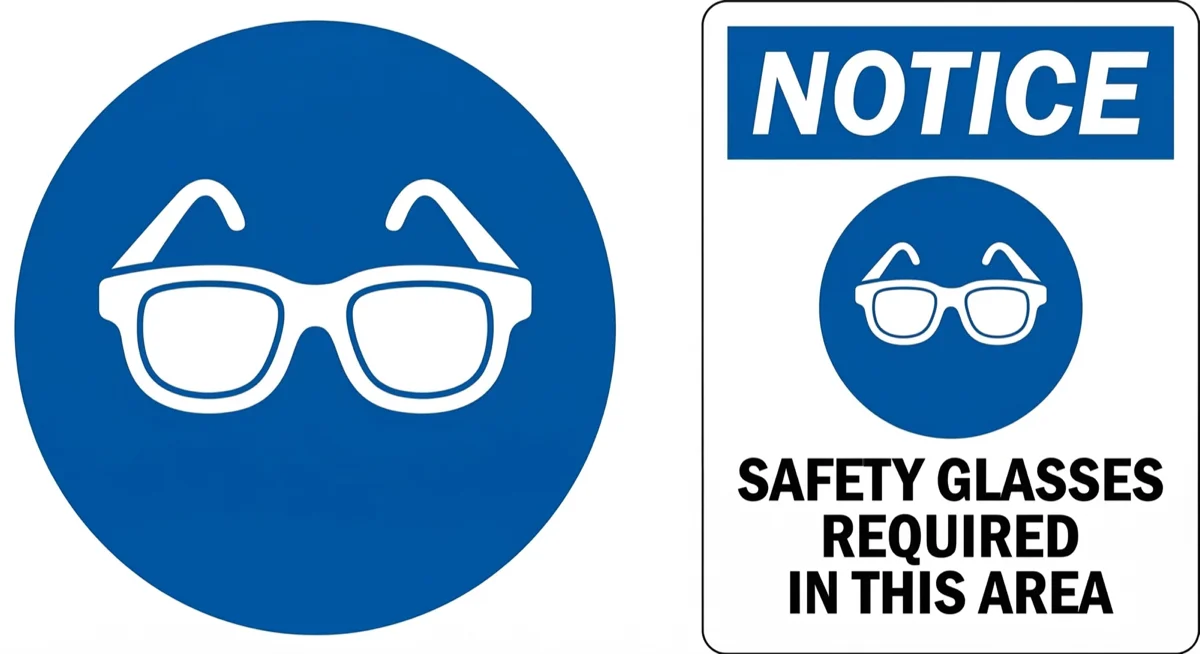
Left: ISO 7010 M004 — symbol only. Right: ANSI Z535 format — same symbol with signal word and text.
| Feature | ISO 7010 | ANSI Z535 |
|---|---|---|
| Origin | International (ISO/TC 145) | United States (NEMA / ANSI) |
| Text on sign | Symbol only (text optional on separate panel) | Signal word + text message required |
| Signal words | None | DANGER, WARNING, CAUTION, NOTICE |
| Color system | ISO 3864 / CIE coordinates | ANSI Z535.1 (similar but not identical values) |
| Shape rules | Shape tied to message type (circle, triangle, rectangle) | Rectangular headers with color-coded signal word panels |
| OSHA recognition | Accepted but not specifically referenced | Referenced in OSHA 1910.145 |
| Best fit | Multilingual workforces, international facilities, export products | Domestic U.S. facilities, product liability signage |
Can you use both? Yes. Many facilities post ANSI Z535 signs to satisfy OSHA and add ISO 7010 pictograms on the same sign or as a companion sign. ANSI Z535.3 (2011 and later) explicitly allows the use of ISO-style symbols within the ANSI format. This combination is common in pharmaceutical plants, food processing, and any site that hosts contractors or visitors from outside the U.S.
For product safety labels (on machinery, tools, consumer goods), ANSI Z535.4 remains the dominant standard in North American product liability cases. ISO 7010 is more commonly applied to facility signage (walls, doors, floors, posts).
Implementation Requirements
Posting the right sign in the wrong place does not count as compliance. ISO 7010 works in conjunction with ISO 16069 (safety way guidance systems) and ISO 3864-1 (design principles) to specify how and where signs should be mounted.
- Placement height: Mount signs between 1.5 m (5 ft) and 2.0 m (6.5 ft) above the floor for wall-mounted signs. Overhead signs should hang at a minimum of 2.1 m (7 ft) clear height with the bottom edge visible from the intended viewing distance.
- Decision points: Place signs at every location where a person must choose between two or more directions of travel. This includes corridor junctions, stairwell entries, and floor landings.
- Line of sight: No sign should be obstructed by doors in the open position, stacked materials, or other signs. Walk the route from the farthest viewing point to verify.
- Lighting: Signs must be visible under both normal and emergency lighting conditions. Use photoluminescent materials or internally illuminated signs in areas where the power may fail. Photoluminescent signs must be charged by at least 25 lux of ambient light for a minimum of 15 minutes to provide 60 minutes of afterglow visibility.
- Maintenance: Inspect signs at least annually for fading, physical damage, and obstruction. Replace signs when colors no longer match the specified values or when the pictogram is no longer clearly legible at the intended viewing distance.
- Training: Workers should know what each sign category means (prohibition, warning, mandatory, escape, fire) and what action to take. Add ISO 7010 sign recognition to new-hire orientation and annual safety refresher training.
Safety way guidance (ISO 16069)
Escape route signing works as a continuous chain. Overhead signs visible from a distance identify the general direction of travel. Wall-mounted signs at decision points — corridor junctions, stairwell entries, door frames — confirm the route. Low-level or floor-mounted photoluminescent signs guide occupants when smoke obscures signs above waist height. All three tiers must be present so the chain is never broken, even during a power failure.
Workplace Sign Audit Checklist
Use this checklist when surveying your facility for ISO 7010 compliance. Walk each zone and check every item. Mark each sign that fails a check so you can batch replacements.
Visibility and Sizing
- Sign is sized correctly for the actual viewing distance (see sizing table above)
- Sign is not blocked by open doors, equipment, racks, or other signs
- Sign is visible under both normal and emergency lighting
- Photoluminescent signs receive at least 25 lux of charging light
Condition
- Colors have not faded and still match the required Pantone or CIE values
- No cracks, peeling, or delamination on the sign face
- Mounting hardware is secure (sign is not tilted, loose, or missing)
- Surface is clean and free of paint overspray, stickers, or graffiti
Correctness
- Sign matches the actual hazard or instruction at the location
- No outdated signs referring to removed hazards or relocated equipment
- Exit route signs form an unbroken chain from every occupied space to the final exit
- Fire equipment signs are posted directly above or beside the equipment they identify
Documentation
- Sign inventory log is current (location, sign reference number, date installed)
- Last inspection date and inspector name are recorded
- Replacement or repair orders are filed for any signs that failed checks
Common Sign Reference
The table below lists the most frequently specified ISO 7010 signs in commercial and industrial facilities. Each sign has a fixed reference number that should appear in your safety plans and procurement specs.
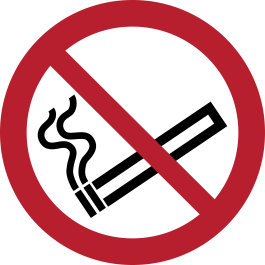
P002: No smoking
Prohibition
Building entries, fuel areas, storage rooms
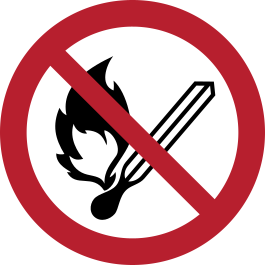
P003: No open flame
Prohibition
Flammable storage, paint booths
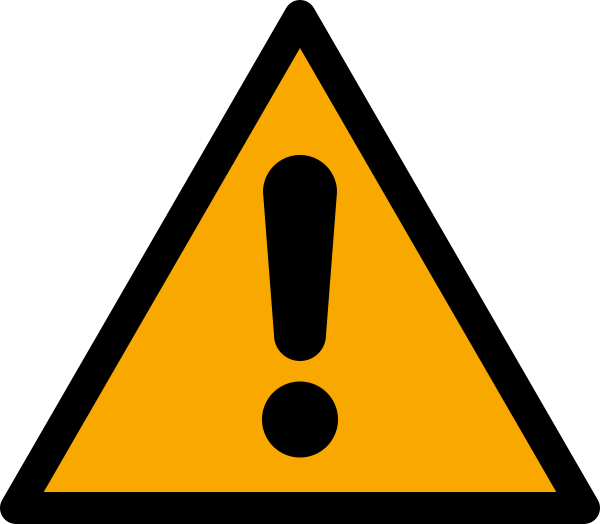
W001: General warning
Warning
Entrances to hazardous areas
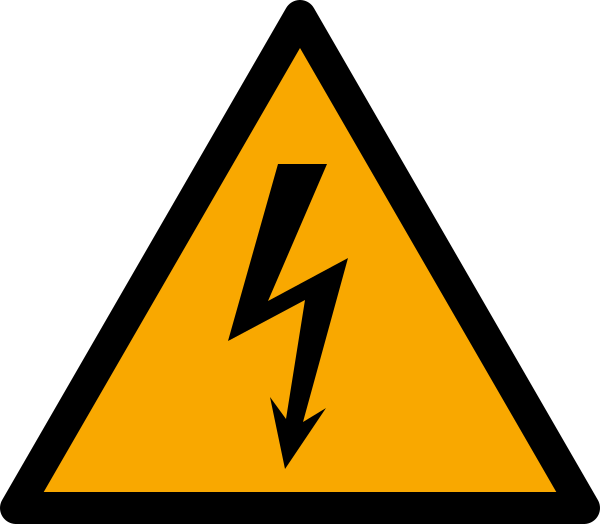
W012: Electricity hazard
Warning
Electrical panels, transformer rooms
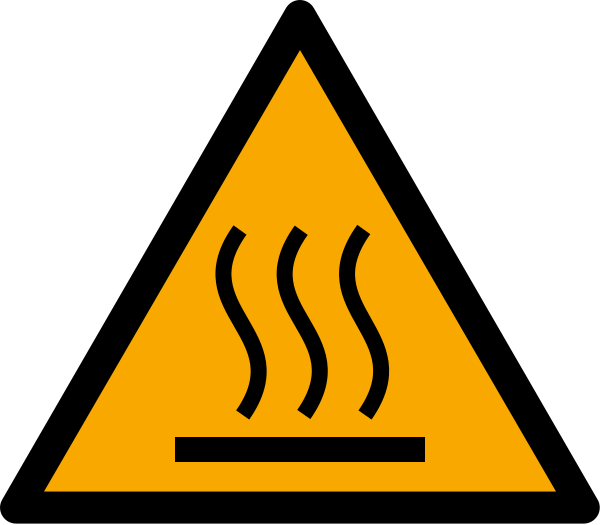
W017: Hot surface
Warning
Ovens, steam pipes, exhaust ducts

M004: Wear eye protection
Mandatory
Grinding stations, labs, welding areas

M003: Wear ear protection
Mandatory
Areas above 85 dBA

M014: Wear head protection
Mandatory
Construction sites, loading docks
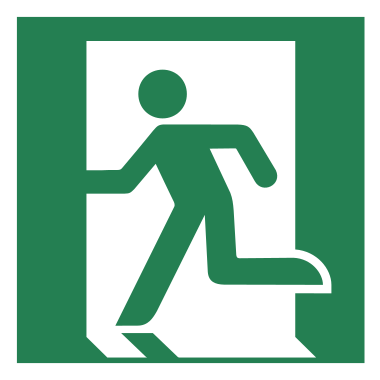
E001: Emergency exit (left)
Emergency
Above exit doors and along exit routes

E003: First aid
Emergency
First aid stations, kit locations
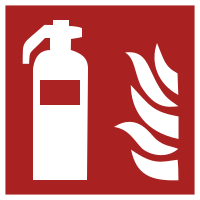
F001: Fire extinguisher
Fire
Above or beside each extinguisher
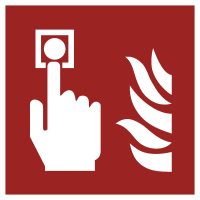
F005: Fire alarm call point
Fire
Beside each manual pull station
ISO 7010 signs in stock
We currently carry F-series fire equipment signs and are adding more of the ISO 7010 line over time.


Related Standards
ISO 7010 does not work in isolation. It references and is referenced by several companion standards:
- ISO 3864-1: Design principles for safety signs, including color area ratios, border widths, and the viewing distance formula
- ISO 3864-3: Design principles for graphical symbols used in safety signs (symbol grid layout and proportions)
- ISO 3864-4: Colorimetric and photometric properties of safety sign materials
- ISO 16069: Safety way guidance systems, covering the arrangement and spacing of escape route signs
- ANSI Z535 series: The American standard for safety signs and colors. See comparison above
- EN ISO 7010: The European adoption of ISO 7010, identical in content but published as a European standard for regulatory purposes within the EU
- OSHA 1910.145: U.S. federal regulation for accident prevention signs and tags. Does not require ISO 7010 specifically but accepts signs that meet the intent of the standard. See our safety compliance guides
Frequently Asked Questions
Is ISO 7010 required in the United States?
No. OSHA references ANSI Z535 (via 29 CFR 1910.145), not ISO 7010. That said, OSHA will accept ISO 7010 signs as long as they effectively communicate the hazard. Many U.S. facilities with international operations or multilingual workforces post ISO 7010 signs alongside ANSI signs.
What size safety sign do I need?
That depends on how far away the sign needs to be read. Use the formula h = L / Z from ISO 3864-1, where L is viewing distance and Z is 100 for normal lighting or 50 for poor lighting. See the viewing distance table for worked examples.
Can I put text on an ISO 7010 sign?
Yes, but the text goes on a separate supplementary panel below the symbol. The graphical symbol itself must remain exactly as registered (no text overlaid on the pictogram). This keeps the sign recognizable to people who do not speak the language of the supplementary text.
What is the difference between ISO 7010 and ISO 3864?
ISO 3864 sets the rules (shapes, colors, proportions, sizing formulas). ISO 7010 is the catalog of registered symbols that follow those rules. You need both: ISO 3864 tells you how to design, size, and place a sign, and ISO 7010 tells you which specific pictogram to use for each hazard or instruction.
How often should safety signs be inspected?
At least once per year. Inspect for fading, physical damage, obstruction, and whether the sign still matches the current hazard at that location. High-traffic or harsh-environment areas (outdoor, chemical exposure, high UV) may need quarterly checks.
Do photoluminescent signs need to meet ISO 7010?
Photoluminescent signs that display ISO 7010 symbols must still meet the color, proportion, and sizing requirements. They also need to meet ISO 3864-4 for luminance performance. Typically they must provide at least 2 mcd/m² after 10 minutes and 0.3 mcd/m² after 60 minutes of darkness following a 15-minute charge at 25 lux.
Can I combine ISO 7010 and ANSI Z535 on the same sign?
Yes. ANSI Z535.3 (2011 and later) allows ISO-style graphical symbols to be used within the ANSI sign format. A common approach is to use the ANSI header panel (signal word and color) with an ISO 7010 pictogram in the symbol panel. This gives you OSHA-compliant text and an internationally recognized symbol on one sign.
Where can I look up an ISO 7010 sign by its reference number?
The ISO Online Browsing Platform (OBP) hosts the full list of registered symbols with their reference numbers and graphical previews. It is free to browse. Browse ISO 7010 on the OBP
Resources
Was this page helpful?
Your feedback helps us improve our technical resources.