
UL 181, UL 181A, and UL 181B: What Duct Tape and Mastic Markings Mean
The duct closure listing system decoded: which marking belongs on which duct type, and why unlisted duct tape fails inspection.
Overview
Three different number families show up on duct tapes and mastic pails: UL 181, UL 181A, and UL 181B. They look interchangeable. They are not. UL 181 covers factory-made air ducts and air connectors themselves. UL 181A covers closure systems for rigid fiberglass duct board. UL 181B covers closure systems for flexible air ducts and connectors. The suffix tells you what the product is listed to seal, not how strong it is.
The markings matter because they are how the code gets enforced. Inspectors check duct materials and closure products for a printed listing marking that matches the duct type. The stakes are not trivial either: ENERGY STAR estimates that in a typical house, about 20 to 30 percent of the air moving through the duct system is lost to leaks, holes, and poorly connected ducts.
The Decoder Table
Every listed closure product is marked with one of six designations. Match the marking to the duct type and you have answered the inspector's first question.
| Marking | Product type | Listed to seal | Standard |
|---|---|---|---|
| 181A-P | Pressure-sensitive tape | Rigid fiberglass duct board | UL 181A |
| 181A-M | Mastic | Rigid fiberglass duct board | UL 181A |
| 181A-H | Heat-activated tape | Rigid fiberglass duct board | UL 181A |
| 181B-FX | Pressure-sensitive tape | Flexible ducts and connectors, plus metal ducts per the IMC | UL 181B |
| 181B-M | Mastic | Flexible ducts and connectors, plus metal ducts per the IMC | UL 181B |
| 181B-C | Nonmetallic mechanical fasteners | Flexible duct connections | UL 181B |
The part everyone gets backwards
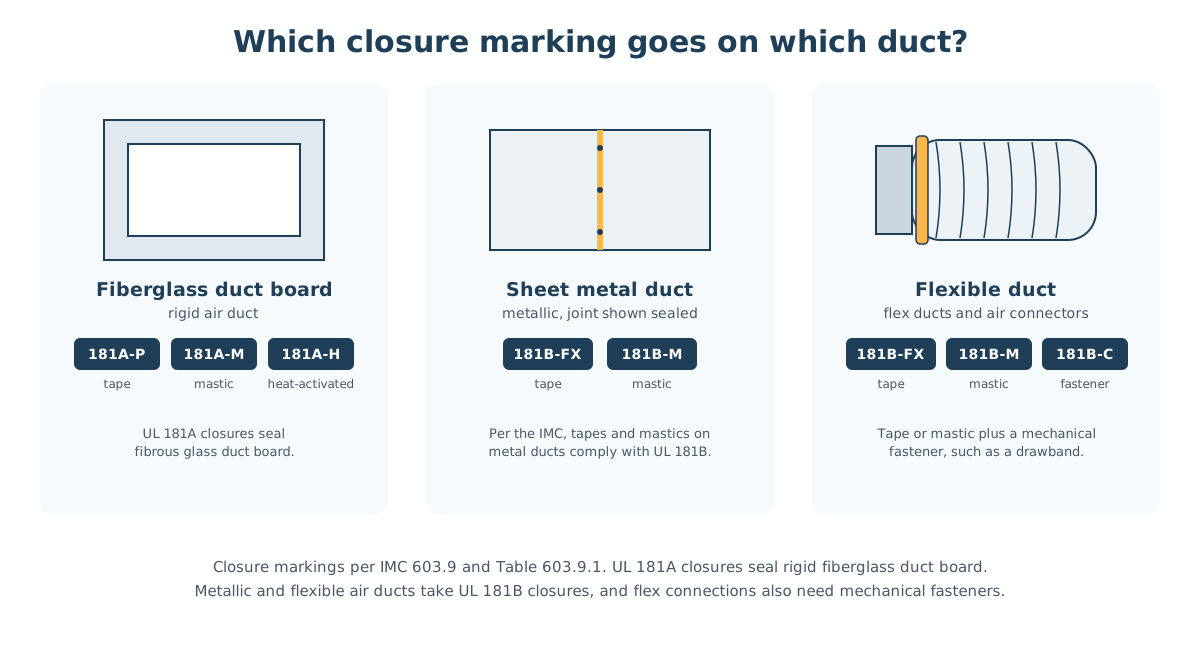
UL 181A is titled "Closure Systems for Use With Rigid Air Ducts," so contractors assume it covers sheet metal. It does not. Under the IMC, tapes and mastics used to seal fibrous glass ductwork are listed to UL 181A, while tapes and mastics used to seal metallic and flexible air ducts comply with UL 181B. The "rigid" in the 181A title means rigid fiberglass duct board.
UL 181: Factory-Made Air Ducts
UL 181 is the Standard for Factory-Made Air Ducts and Air Connectors. It applies to the duct product itself: fiberglass duct board, flexible duct, and other factory-made duct and connector materials. The standard defines two classes by surface burning performance:
- Class 0: air ducts and air connectors with surface burning characteristics of zero.
- Class 1: air ducts and air connectors with a flame-spread index of not over 25, without evidence of continued progressive combustion, and a smoke-developed index of not over 50.
A roll of flex duct is itself listed and printed as a Class 0 or Class 1 air duct under UL 181. The tape or mastic that closes its joints carries a separate listing under UL 181A or UL 181B. Both listings have to be right for the installation to pass.
UL 181A: Closures for Rigid Duct Board
UL 181A is the Standard for Closure Systems for Use With Rigid Air Ducts. In practice that means fibrous glass duct board. It lists three closure types, each with its own marking:
- 181A-P: pressure-sensitive tape, applied to the duct board's foil facing.
- 181A-M: mastic, brushed or troweled over joints and seams.
- 181A-H: heat-activated tape, bonded to the facing by applying heat.
Duct board systems live or die by their closures, because the board itself has no mechanical joint strength comparable to sheet metal. That is why the UL 181A test program includes a 50,000-cycle pressure and temperature simulation, covered in the testing section below.
UL 181B: Closures for Flexible Duct
UL 181B is the Standard for Closure Systems for Use With Flexible Air Ducts and Air Connectors. Its markings are 181B-FX for pressure-sensitive tape, 181B-M for mastic, and 181B-C for nonmetallic mechanical fasteners such as duct ties. The IMC also points metal-duct tapes and mastics at UL 181B, which is why most quality foil tapes and duct mastics carry the 181B marking, and many carry both 181A and 181B listings.
Flexible duct has one extra rule that trips up a lot of installations: tape or mastic alone is not a complete closure. Per IMC Table 603.9.1, mechanical fasteners are required in conjunction with a listed pressure-sensitive tape or mastic on flexible ductwork.
What a compliant flex connection looks like
California's Title 24 spells out the fastener: a stainless-steel worm-drive hose clamp or a UV-resistant nylon duct tie with a minimum tensile strength rating of 150 pounds, tightened with an adjustable tensioning tool. The inner core gets mechanically fastened, then the listed tape or mastic seals the connection.
What the Listing Tests Require
The marking on a tape or mastic represents a specific battery of physical and application tests. Here is what UL 181A-P duct board tape and UL 181B-FX flex duct tape each have to survive:
| Requirement | 181A-P (duct board tape) | 181B-FX (flex duct tape) |
|---|---|---|
| Tensile strength, machine direction | Over 25 lb/in | Over 17 lb/in |
| Tensile strength, cross direction | Over 25 lb/in | Over 8 lb/in |
| Peel adhesion at 180 degrees (per ASTM D3330) | Over 60 oz/in | Over 30 oz/in |
| Long-term heat exposure | Pressure and temperature cycling, below | 60 days at 212°F with no visible deterioration |
| Mold growth and humidity | 60 days minimum at 100% RH, no mold spread or deterioration | Same |
| Surface burning (ASTM E84 / UL 723) | Flame spread under 25, smoke developed under 50 | Same |
The UL 181A duct simulation is the brutal one: a taped duct board assembly takes 30,000 pressure cycles at 165°F, then 15,000 cycles at 90°F and 90 percent relative humidity, then 5,000 cycles at 0°F. At the end, leakage has to stay at or below 15 cfm at 3 inches water column, with no tape displacement and no openings wider than 1/8 inch. For reference, a passing acrylic foil tape typically finishes the surface burning tunnel test with flame spread values between 5 and 15 and smoke developed values between 0 and 15.
Where Codes Require These Markings
IMC Section 603.9 requires longitudinal and transverse joints, seams, and connections in ducts to be constructed per the SMACNA HVAC Duct Construction Standards (metal) or the NAIMA Fibrous Glass Duct Construction Standards, and to be securely fastened and sealed with one of six closure methods: welds, gaskets, mastics, mastic-plus-embedded-fabric systems, liquid sealants, or tapes. Tapes and mastics on fibrous glass ductwork carry UL 181A markings; tapes and mastics on metallic and flexible ducts comply with UL 181B. The 2021 IMC consolidates the marking requirements into Table 603.9.1.
One exception worth knowing: continuously welded joints and seams, and locking-type longitudinal joints and seams, do not require additional closure systems on ducts operating below the 2 inch water column pressure classification. That is the code basis for leaving snap-lock seam pipe unsealed on low-pressure residential trunk, though energy codes often require sealing anyway.
California writes the listing requirement into its energy code. California Title 24 Sections 120.4 and 150.0(m) require duct connections to be mechanically fastened and openings sealed with mastic, tape, or aerosol sealant meeting UL 723 or a duct-closure system meeting UL 181, UL 181A, or UL 181B. Openings wider than 1/4 inch need mastic combined with mesh or tape, and cloth-backed rubber-adhesive duct tape is prohibited on joints and seams unless combined with mastic and drawbands. For the seal classes, leakage thresholds, and testing numbers behind these rules, see the duct sealing requirements guide.
What Inspectors Look For
Duct closure enforcement comes down to four checks:
- The printed listing marking on the tape roll or mastic pail matches the duct type: 181A markings on fiberglass duct board, 181B markings on metal and flex.
- Flexible duct connections have mechanical fasteners in addition to the listed tape or mastic.
- Openings wider than 1/4 inch are sealed with mastic plus mesh or tape, not tape alone.
- The tape is not a general-use insulation tape. Tapes that are only UL 723 Classified for surface burning are for jobs like seaming insulation facing. A 723 rating is not a UL 181A or 181B duct-closure listing.
What UL 181 Does Not Cover
Kitchen grease exhaust ducts
Caution: Grease ducts under NFPA 96 and IMC Section 506 are built with continuous liquid-tight welded joints. No tape or mastic closure system is permitted on a grease duct, and a taped grease duct joint is a fire code violation.
Duct penetrations through fire-rated assemblies
Where a duct passes through a fire-rated wall or floor, the opening around the duct is sealed by a through-penetration firestop system tested to UL 1479. That is firestop scope, not duct closure scope. The firestop product selection guide covers which firestop product fits each penetration.
Flues, vents, and exhaust connectors
Combustion flues and high-heat exhaust run hotter than air-duct closure products are listed for. Sealing around water heater flues, furnace vent connectors, and similar high-temperature work is covered in the high-temperature sealant guide.
Frequently Asked Questions
What is the difference between UL 181, UL 181A, and UL 181B?
UL 181 covers factory-made air ducts and air connectors themselves. UL 181A covers closure systems for rigid fiberglass duct board: tapes, mastics, and heat-activated tapes. UL 181B covers closure systems for flexible air ducts and connectors. The suffix tells you what the product is listed to seal, not how strong it is.
What does the 181B-M marking on a duct sealant mean?
It means the mastic is listed under UL 181B for closing flexible air ducts. The IMC requires mastic used on metallic and flexible ducts to carry a UL 181B listing, and on flex duct the mastic must be paired with mechanical fasteners such as drawbands.
Is regular cloth duct tape allowed for sealing ducts?
No. Unlisted cloth duct tape is not one of the closure methods the IMC accepts, and California Title 24 prohibits cloth-backed rubber-adhesive tape on joints and seams unless it is combined with mastic and drawbands. In LBNL durability testing, cloth duct tape was the only sealing material that failed, often within days.
Do sheet metal duct joints need UL 181 listed sealant?
Yes, where sealing is required. The IMC directs that tapes and mastics used to seal metallic ducts comply with UL 181B, and continuously welded or locking-type longitudinal seams below the 2 inch water column pressure class are exempt from additional closure.
What do inspectors look for on duct sealing?
The printed listing marking on the tape roll or mastic pail, matched to the duct type: 181A markings on fiberglass duct board, 181B markings on metal and flex. They also check for mechanical fasteners on flex connections and mastic with mesh on openings wider than 1/4 inch.
Does UL 181 apply to kitchen grease exhaust ducts?
No. Grease ducts under NFPA 96 must be welded or brazed liquid-tight. Tape and mastic closure systems are for HVAC air ducts only.
Sourcing UL 181 listed duct sealant or foil tape?
We source US-made, UL 181 listed mastics and closure tapes for contractor and facility orders. Tell us about the job and we will be in touch with options and pricing.
or call 714-248-6555 · email partners@usmadesupply.com
Was this page helpful?
Your feedback helps us improve our technical resources.