
Silicone vs Polyurethane Roof Coating
Last updated: May 31, 2026
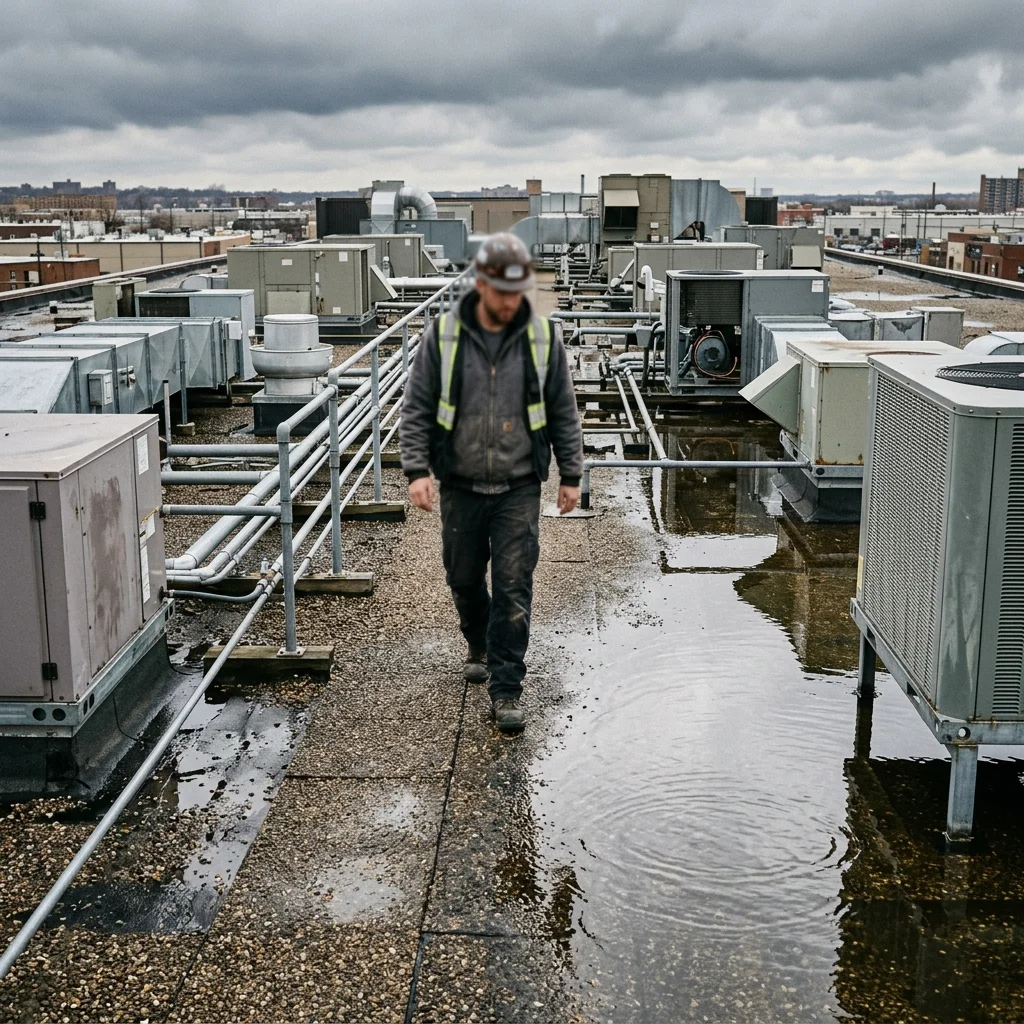
Overview
This is a two-chemistry call that splits cleanly on one question: is the roof's controlling problem standing water, or physical wear? Silicone owns ponding and high-UV exposure. Polyurethane owns abrasion, puncture, and foot traffic. Installed cost is close enough between the two that price rarely breaks the tie, so the decision lands on how the roof actually gets used.
Silicone is a single-component, moisture-curing film that sits in standing water without softening and does not chalk under heavy sun. It applies in one coat over a sound substrate. Polyurethane is the tougher film: an aromatic base coat carries the tensile and tear strength, and an aliphatic topcoat holds color and UV. That two-coat system is the chemistry for roofs with regular equipment access, PV or HVAC service paths, and walking-deck or occupied-space use. For the four-chemistry overview and how these two compare to acrylic and SEBS rubber, start with the elastomeric roof coating guide.
Key point: A coating restores a sound roof. It does not rebuild a failing one. The substrate has to be structurally sound, the seams and flashings repaired, and the deck dry before either chemistry goes down. Pick the chemistry by the roof's controlling failure mode, then verify against the membrane manufacturer's approved-coating list.
Correct slope and drainage first. Neither chemistry is a substitute for positive drainage. Silicone is the answer when ponding cannot be corrected; polyurethane earns its place on traffic and abrasion. Settle the drainage question before the chemistry one.
Quick Verdict
If you want the short answer before the table, here it is. Match the chemistry to the problem that will end this roof's service life first.
Pick silicone if:
- Water sits more than 48 hours after rain and the owner will not fix drainage first.
- The roof bakes under intense UV and you want no chalk over a 15-to-20-year hold.
- You want a cool-roof story: white, high reflectance, single-coat application.
- Foot traffic is occasional and can be routed to designated walk pads.
Pick polyurethane if:
- The roof sees constant foot, equipment, or cart traffic that drags across the film.
- PV or HVAC crews work the roof on a routine cadence with tools and dollies.
- It is a walking deck or sits over occupied space and needs a wear surface.
- A slick wet film is a safety problem you cannot solve with walk pads alone.
The honest tradeoff cuts both ways. Silicone is slick when wet, picks up dirt so its reflectance drops over time, and locks the roof into silicone-only recoats once the first coat cures. Polyurethane handles ponding better than acrylic but not as well as silicone, and the two-coat system demands recoat-window discipline between the base and the topcoat. For the deeper single-chemistry detail, see the silicone roof coating guide and the polyurethane roof coating guide.
Head to Head
Typical commercial low-slope values. Treat ranges as ranges, and verify any number against the specific product's current technical data sheet before specifying. The ASTM rows are the published minimum floors from each chemistry's governing standard, not the typical formulated value.
| Property | Silicone | Polyurethane |
|---|---|---|
| Installed cost ($/sqft) | $2.00 to $5.00 | $2.50 to $5.00 |
| Ponding water | Strongest; cured film stable submerged | Moderate; better than acrylic, handles under-48-hour |
| Abrasion / traffic | Low; slippery when wet | High; the traffic chemistry |
| UV / chalk | No chalk; backbone does not degrade in sun | Aliphatic topcoat holds UV; aromatic base yellows alone |
| Recoatability | Silicone-over-silicone is the generally specifiable path | Polyurethane-over-polyurethane preferred |
| ASTM min tensile / elongation | 150 psi / 100% (D6694) | 1,500 psi / 75% (D6947) |
| Cool-roof story | Strong; white, high reflectance | Conditional; aliphatic white only, verify on CRRC |
| Walking-deck fit | Not the wear chemistry; route to walk pads | Yes; AC39-evaluated assemblies are polyurethane |
ASTM floors per ASTM D6694/D6694M-25 (silicone) and ASTM D6947/D6947M-16(2023) (polyurethane). D6947's scope is single-component moisture-cured polyurethane over spray polyurethane foam; it does not govern every roof polyurethane or two-component system.
Read the tensile row in context. Polyurethane's 1,500 psi floor is ten times silicone's, which is the whole reason it wins on a traffic deck. But tensile is not the number that keeps a flat roof dry under standing water; ponding stability is, and that is where silicone wins. Different controlling problem, different chemistry.
Buyer Scenarios
Four real splits. Each names a winner and the reason the other chemistry loses on that roof.
1. Ponding-dominant flat roof, little traffic
A low-slope warehouse roof that holds water in the corners more than 48 hours after rain, with no regular roof access beyond a once-a-quarter HVAC check.
Winner: silicone. The cured film sits in standing water without softening, which is the one thing the roof needs. Polyurethane handles short ponding but is not the chemistry for confirmed long-term standing water. Route the occasional foot traffic to manufacturer walk pads and you have solved the only silicone weakness that applies here. See the silicone roof coating guide.
2. Constant HVAC and PV foot traffic with equipment dragging
A roof with a dense rooftop unit array and a PV field, worked weekly by service crews hauling tools, dollies, and replacement parts across the same paths.
Winner: polyurethane. Silicone is wrong here. It is slippery when wet and its tear resistance is lower, so dragged equipment cuts the film and crews slip on the service paths. Specify a two-coat polyurethane with an aliphatic topcoat for UV stability. See the polyurethane roof coating guide.
3. Walking deck over occupied space needing a wear surface
A deck people walk on, over offices or a residence below, where the assembly has to carry pedestrian wear and the project needs a path to code-compliant repair.
Winner: polyurethane. This is the crossover chemistry for walking decks. The ICC-ES acceptance criterion AC39 covers walking decks, and an AC39-evaluated assembly can support a code-compliant repair when the evaluation report's scope and the local code both fit. Silicone is wrong on a walking surface: too slick wet, not built for sustained pedestrian wear. Walking-deck cost runs much higher than roof-coating cost, so price it separately; see the walking deck cost by project type guide.
4. High-UV flat roof, no traffic, budget matters
A flat roof in a Southwest or Southern US climate with brutal sun, no routine roof access, and an owner watching the per-square-foot number.
Winner: silicone. No chalk, no backbone degradation under heavy sun, and a single-coat application that keeps labor down. Polyurethane survives UV with an aliphatic topcoat, but that two-coat system costs more without buying anything this roof needs. With no traffic on the deck, polyurethane's tear strength is performance you pay for and never use.
Cost Comparison
Installed cost is close enough between silicone and polyurethane that it rarely breaks the tie on a standard low-slope roof. Both land in the same band; traffic, ponding, and the wear-surface requirement decide the chemistry, not the price.
Roof coating (non-walking-deck) installed cost
| Chemistry | Installed $/sqft | Service life at spec DFT |
|---|---|---|
| Silicone | $2.00 to $5.00 | 15 to 20 years |
| Polyurethane | $2.50 to $5.00 | 10 to 20 years |
Coastal labor markets and roofs that need real prep (wet insulation removal, drain replacement, seam reinforcement) push either chemistry to the high end. The warranty tier is driven by dry film thickness, not chemistry: roughly 20 mils for a 10-year hold, 25 mils for 15, 30 mils for 20.
Walking deck is a different cost category
A walking deck is not priced like a roof coating. When polyurethane wins because the surface is a deck people walk on, the cost ranges segment by project type and run well above the roof-coating numbers above:
- Repair coating to an SB-721 inspection scope: roughly $36 to $200 per square foot, depending on the structural condition found during repair.
- Podium deck replacement: roughly $25 to $40 per square foot.
- Parking deck replacement: roughly $35 to $50 per square foot.
Do not blend the two cost categories. A flat-roof silicone restoration at a few dollars per square foot and a walking-deck repair scope are different jobs with different scopes. If the surface carries pedestrian or vehicle traffic, price it as a deck. For the full breakdown by project type, see the walking deck cost by project type guide.
Recoat & Compatibility
Read this before the first coat goes down, because the recoat path changes the roof's whole lifecycle. The two chemistries do not freely convert to one another.
Polyurethane does not go over cured silicone. This is the same surface-energy problem that stops acrylic over silicone. Cured silicone is too hydrophobic for a polyurethane to wet out and bond reliably, so a polyurethane topcoat over a silicone roof is generally not specifiable. Do not plan a polyurethane wear surface on top of an existing silicone roof. The standard paths are full mechanical removal of the silicone before applying polyurethane, or restricting traffic to manufacturer-approved walk pads bonded per the silicone manufacturer's instructions.
The recoat rules that hold for each chemistry:
- Silicone recoats with silicone. Power wash, spot-prime wear-through, and reapply the same product or a manufacturer-compatible silicone. Almost nothing else goes over cured silicone.
- Polyurethane recoats with polyurethane, same chemistry preferred. The two-coat system needs recoat-window discipline between the aromatic base and the aliphatic topcoat per the product data sheet.
- Switching chemistries either direction means full mechanical removal or a cover-board re-roof. There is no cheap chemistry switch out of either film.
Compatibility is product-system-specific, not chemistry-category-wide. The actual job gets its recoat and primer rules from the existing coating's recoat bulletin and the new product's data sheet. Defer to the manufacturer's approved-coating list rather than a universal rule. For the three-way picture with acrylic in the mix, see the acrylic vs silicone vs polyurethane comparison and the silicone vs acrylic comparison.
Frequently Asked Questions
Which is better, silicone or polyurethane?
Neither is better across the board; they win on different problems. Silicone wins on ponding water and high-UV exposure. Polyurethane wins on abrasion, puncture, and foot traffic. Pick the chemistry that matches the failure mode that will end your roof's service life first, then verify against the manufacturer's approved-coating list.
Can I put a polyurethane topcoat over a silicone roof?
Generally no. Cured silicone is too hydrophobic for polyurethane to bond reliably, the same surface-energy problem that stops acrylic over silicone. A polyurethane over cured silicone is generally not specifiable. The standard paths are full mechanical removal of the silicone before applying polyurethane, or restricting traffic to manufacturer-approved walk pads bonded per the silicone manufacturer's instructions.
Does polyurethane handle ponding water?
Polyurethane handles ponding better than acrylic and tolerates standing water under about 48 hours, but it is not the chemistry for confirmed long-term ponding. If water sits on the roof more than 48 hours after rain and the owner will not fix drainage, silicone is the call.
Which is tougher under foot traffic?
Polyurethane. Its ASTM D6947 minimum tensile floor is 1,500 psi against silicone's 150 psi under D6694, and it resists abrasion and puncture far better. Silicone is also slippery when wet, which is a safety problem on service paths. For a roof with regular traffic, specify polyurethane.
Do silicone and polyurethane cost the same to install?
They are close. Silicone runs about $2.00 to $5.00 per square foot installed and polyurethane about $2.50 to $5.00, both for a commercial low-slope system. Because the bands overlap, cost rarely breaks the tie. Traffic and ponding decide the chemistry. A walking deck is a separate, higher cost category.
Which is the right call for a walking deck over occupied space?
Polyurethane. It is the crossover chemistry for walking decks. The ICC-ES acceptance criterion AC39 covers walking decks, and an AC39-evaluated assembly can support a code-compliant repair when the evaluation report's scope and the local code fit. Silicone is too slick when wet and is not built for sustained pedestrian wear.
Which is the stronger cool-roof choice?
Silicone. White silicone gives high solar reflectance and is the stronger cool-roof story; polyurethane is conditional, since only aliphatic white products reach the thresholds and you have to verify each on the CRRC directory. For a California project, Title 24 (2025 cycle) sets the low-slope nonresidential prescriptive values at aged solar reflectance 0.63, thermal emittance 0.75, or SRI 75. Outside California, reference CRRC and the local cool-roof code.
Does ASTM D6947 govern all roof polyurethane?
No. ASTM D6947/D6947M-16(2023) covers single-component moisture-cured polyurethane over spray polyurethane foam. It does not govern every roof polyurethane or two-component traffic system. For an integral-wearing-surface traffic coating, ASTM C957 is the relevant standard. Read the product data sheet for the standard each product actually reports against.
Will silicone chalk like some other coatings?
No. The silicone backbone has no carbon-carbon bonds for UV to cleave, so it does not chalk under heavy sun. The real aging issue with white silicone is dirt pickup, which drops reflectance over time. A pressure wash 6 to 12 months after install recovers most of the lost reflectance.
Roof Coating Products


Was this page helpful?
Your feedback helps us improve our technical resources.