
Class B Fire Extinguishers: Flammable Liquid Fires
What a Class B rating actually measures, how NFPA 10 sizes and places the unit, and how to choose between CO2, dry chemical, and Purple K, without the PFAS that comes with foam
Overview
The question that brings most people here is some version of: what fire extinguisher do I need for gasoline, diesel, solvents, or other flammable liquids? That is the Class B fire, and the wrong extinguisher can make it worse instead of putting it out. A plain water unit, for example, will spread a burning liquid rather than cool it.
This guide covers what a Class B fire is and where its boundaries are, what the B number on the label measures, how NFPA 10 decides the size and spacing of the units, and how to choose among the agents that fight flammable-liquid fires: carbon dioxide, multipurpose dry chemical, and Purple K. It closes with the question more facilities are asking now, which is how to cover Class B hazards without the PFAS that comes in firefighting foam.
The one-sentence version: a Class B fire involves flammable or combustible liquids and gases such as gasoline, oil, solvents, and propane. Water is the wrong tool because it spreads the burning liquid. CO2 and Purple K are the two cleanest, most effective portable choices, and neither contains PFAS.
What Class B Is, and What It Is Not
Class B covers fires in flammable and combustible liquids and gases. The common fuels are gasoline, diesel, motor and lubricating oils, petroleum greases, tars, solvents, lacquers, alcohols, oil-based paints and thinners, and flammable gases such as propane and butane.
Two boundaries matter, because the wrong class means the wrong agent:
- Cooking oils and animal fats are not Class B. A hot fryer is a Class K fire, and it needs a wet chemical extinguisher that cools and seals the oil. See our Class K fire extinguisher guide.
- Ordinary combustibles are Class A. Wood, paper, and cloth are Class A. A multipurpose ABC unit covers both A and B, but a pure Class B agent like CO2 or Purple K will not put out a deep-seated Class A fire.
Why water is dangerous on Class B: flammable liquids burn at the surface, and most are lighter than water. A water stream sinks below the fuel, floats the burning layer, and spreads the fire instead of cooling it out. Never use a plain water extinguisher on a flammable-liquid fire.
The B Number Decoded
A Class B extinguisher shows a number in front of the B on its label, such as 10-B, 40-B, or 80-B. That number is roughly the square footage of flammable-liquid fire an untrained operator can put out with the unit. A 10-B handles about 10 square feet, an 80-B about 80.
The rating is deliberately conservative. Under UL 711, the standard that earns the rating, the test fire is larger than the listed number in expert hands, and the published figure is set to roughly 40 percent of the area a trained UL operator extinguishes. The margin is there because the rating assumes an amateur under stress. Note that only Class B ratings map to area; the Class A number is a different scale.
| B Rating | Approximate flammable-liquid fire it covers |
|---|---|
| 5-B | about 5 sq ft |
| 10-B | about 10 sq ft |
| 20-B | about 20 sq ft |
| 40-B | about 40 sq ft |
| 80-B | about 80 sq ft |
How Many, How Big: NFPA 10 Sizing
NFPA 10, the standard for portable fire extinguishers, sets both how far an operator can be from a Class B unit and the minimum rating for the hazard. The maximum travel distance to a Class B extinguisher is 30 or 50 feet, shorter than the 75 feet allowed for Class A, because flammable-liquid fires spread fast.
The trade is straightforward: a larger B rating buys a longer allowed travel distance, so you can place fewer, bigger units. A smaller unit means placing them closer together.
| Hazard level | Min rating at 30 ft travel | Min rating at 50 ft travel |
|---|---|---|
| Light (low) | 5-B | 10-B |
| Ordinary (moderate) | 10-B | 20-B |
| Extra (high) | 40-B | 80-B |
One exception to size for: these minimums are for general flammable-liquid hazards. Class B fires with appreciable depth, meaning a liquid pool deeper than one quarter inch, are sized by the surface area of the largest hazard rather than by travel distance. If you store or handle liquids in open or dip tanks, that is a separate calculation, and your authority having jurisdiction has the final say.
Which Agent for a Class B Fire
Four agents carry a Class B rating, and they are not interchangeable. The right one depends on what is burning, what is nearby, and whether the fire can reflash.
| Agent | Strengths | Tradeoffs |
|---|---|---|
| CO2 | Clean, no residue, non-conductive (also Class C for energized electrical). Ideal near electronics and live equipment. | Short reach and no surface seal, so a pool can reflash once the gas clears. Weak outdoors and in wind. |
| ABC multipurpose | Covers A, B, and C. The versatile all-purpose unit. | Corrosive powder residue, messy cleanup, no lasting vapor seal on deep liquids. |
| Purple K | The strongest Class B dry chemical, roughly twice the knockdown of sodium bicarbonate per pound. The dry chem of choice for aviation ramps, fuel terminals, refineries, and the military. | Class B and C only, no Class A rating. Corrosive residue like other dry chems, no lasting surface seal. |
| Foam (AFFF) | Floats a film and foam blanket that secures the surface and prevents reflash on deep liquid pools. | Contains PFAS (see below). Water-based, so it conducts electricity and is not for energized equipment. |
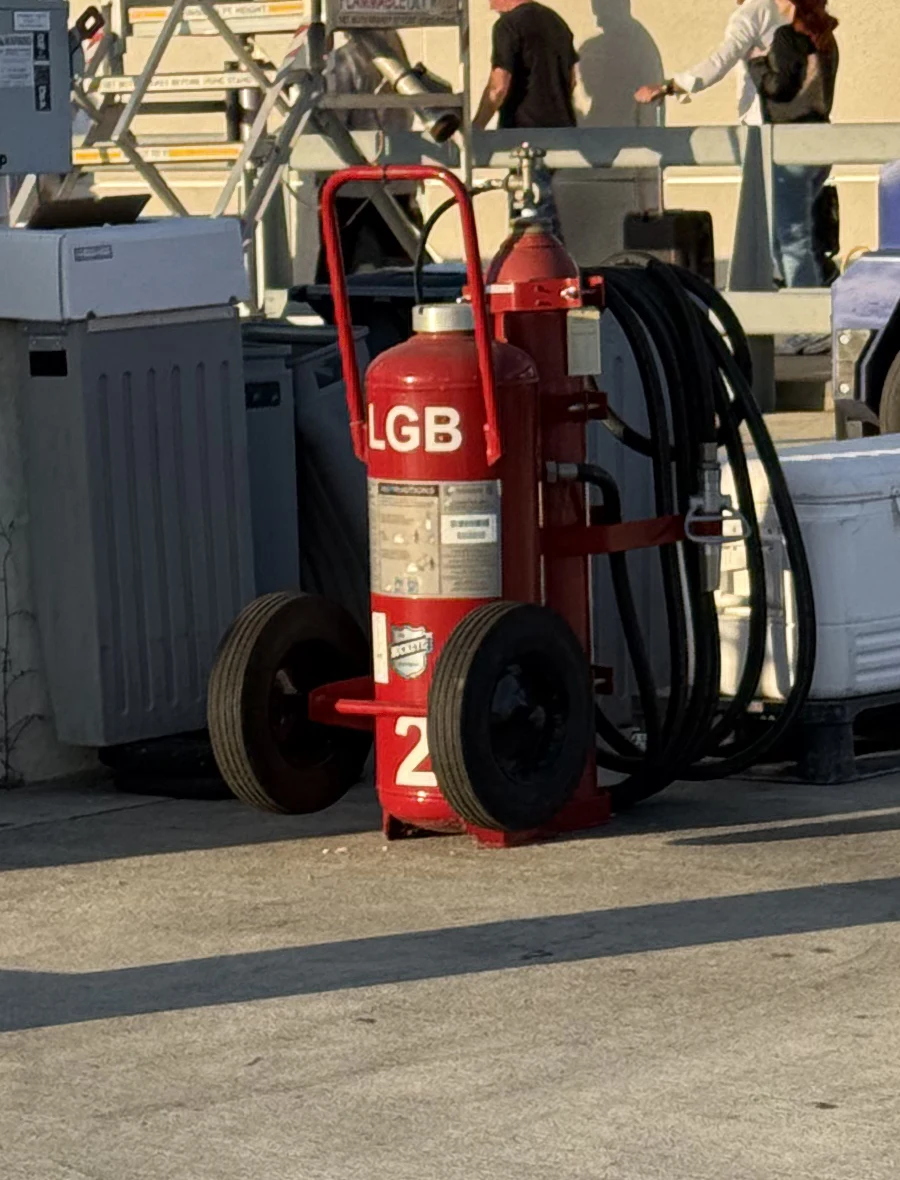
Two practical rules of thumb. For energized electrical equipment or sensitive electronics mixed into the hazard, CO2 is the clean choice because it leaves nothing to wipe off; see our guide to extinguishers for sensitive electronics and the Class C electrical fire guide. For the fastest knockdown of a flammable-liquid fire, Purple K leads the dry chemicals. The two agents are listed to UL 154 (CO2) and UL 299 (dry chemical).
The PFAS Question: Foam and the Alternatives
For decades the textbook answer for a deep flammable-liquid pool was film-forming foam, because the foam blanket secures the surface and stops reflash. That foam, AFFF, contains PFAS, the so-called forever chemicals, and the regulatory picture has changed.
The EPA has designated PFOA and PFOS, two specific PFAS compounds, as hazardous substances under the federal Superfund law. Roughly 30 states now restrict PFAS firefighting foam, most commonly its use in training and testing and its discharge, and a smaller number restrict its sale. The rules vary widely by state and target firefighting foam broadly rather than naming any one product.
The PFAS-free way to cover Class B: CO2 and Purple K (potassium bicarbonate) contain no PFAS, so they are a fluorine-free option for facilities looking to reduce their PFAS footprint. Where a deep liquid pool specifically needs a foam blanket to prevent reflash, newer fluorine-free foam (F3) provides that without PFAS. For most other Class B hazards, Purple K delivers faster knockdown than sodium-bicarbonate dry chemical.
Two things worth keeping straight. Foam extinguishers are not banned for ordinary ownership, and dry chemical does not replace foam's surface-securing advantage on a deep pool. The point is narrower: for the common Class B hazard, the cleanest and most effective portable options, CO2 and Purple K, happen to carry no PFAS at all.
Covering flammable-liquid hazards across a site?
Volume pricing on CO2 and Purple K extinguishers for fuel, fleet, lab, and manufacturing sites, with spec sheets for your fire marshal or insurer. Quotes back within one business day.
or call 714-248-6555 · email partners@usmadesupply.com
Frequently Asked Questions
What is a Class B fire extinguisher?
A portable extinguisher listed to put out fires in flammable and combustible liquids and gases such as gasoline, oil, solvents, and propane. It is marked with a number and the letter B on the label, for example 10-B. The most common Class B agents are carbon dioxide, multipurpose ABC dry chemical, and Purple K.
What does the number before the B mean?
It is roughly the square footage of flammable-liquid fire a non-expert can extinguish with the unit. A 10-B covers about 10 square feet, an 80-B about 80. The figure is set conservatively under UL 711, well below what a trained operator can do, because it assumes an amateur under stress.
Can I use a water extinguisher on a flammable-liquid fire?
No. Most flammable liquids are lighter than water, so a water stream sinks below the fuel and floats the burning layer, spreading the fire. Class B fires need an agent that smothers or interrupts the flame, such as CO2, dry chemical, or Purple K.
CO2, dry chemical, or Purple K for Class B?
CO2 is the clean choice where energized electrical equipment or electronics are involved, since it leaves no residue. Purple K is the strongest dry chemical for fast knockdown of flammable-liquid fires and is the standard at fuel and aviation sites. Multipurpose ABC is the versatile pick when the same area also has ordinary combustibles. None of the three contains PFAS.
Are foam (AFFF) fire extinguishers being banned?
AFFF foam contains PFAS, and the regulatory picture is tightening. The EPA has designated PFOA and PFOS as hazardous substances, and around 30 states restrict PFAS firefighting foam, mostly its discharge, training use, and in some states its sale. The rules vary by state and generally target firefighting foam broadly. For most Class B hazards, PFAS-free agents like CO2 and Purple K are effective alternatives, and fluorine-free foam (F3) exists where a foam blanket is specifically needed.
Class B Extinguishers in Stock

Manufacturer: Buckeye
5 lb
UL 10-B:C
Buckeye 5 lb Purple K BC Fire Extinguisher, Wall Mount or Vehicle Bracket
$102.00

Manufacturer: Buckeye
5 lb
UL 40-B:C
Buckeye 5 lb Standard BC Fire Extinguisher, Wall Mount or Vehicle Bracket, UL Listed 40-B:C
$67.00

Manufacturer: Buckeye
2.5 lb
UL 2-B:C
Buckeye 2.5 lb Halotron Clean Agent Fire Extinguisher
$294.00

Manufacturer: Buckeye
5 lb
UL 5-B:C
Buckeye 5 lb Halotron Clean Agent Fire Extinguisher
$535.00
$575.00
Was this page helpful?
Your feedback helps us improve our technical resources.
Recommended in this guide


