
Halotron Fire Extinguishers for Private Aircraft and Single-Engine Piston Aircraft
Private-aircraft buyers usually want the same thing: a compact extinguisher that can be staged near the aircraft without coating avionics, switches, upholstery, and cabin surfaces in dry-chemical residue. Halotron is the clean-agent path to evaluate first.
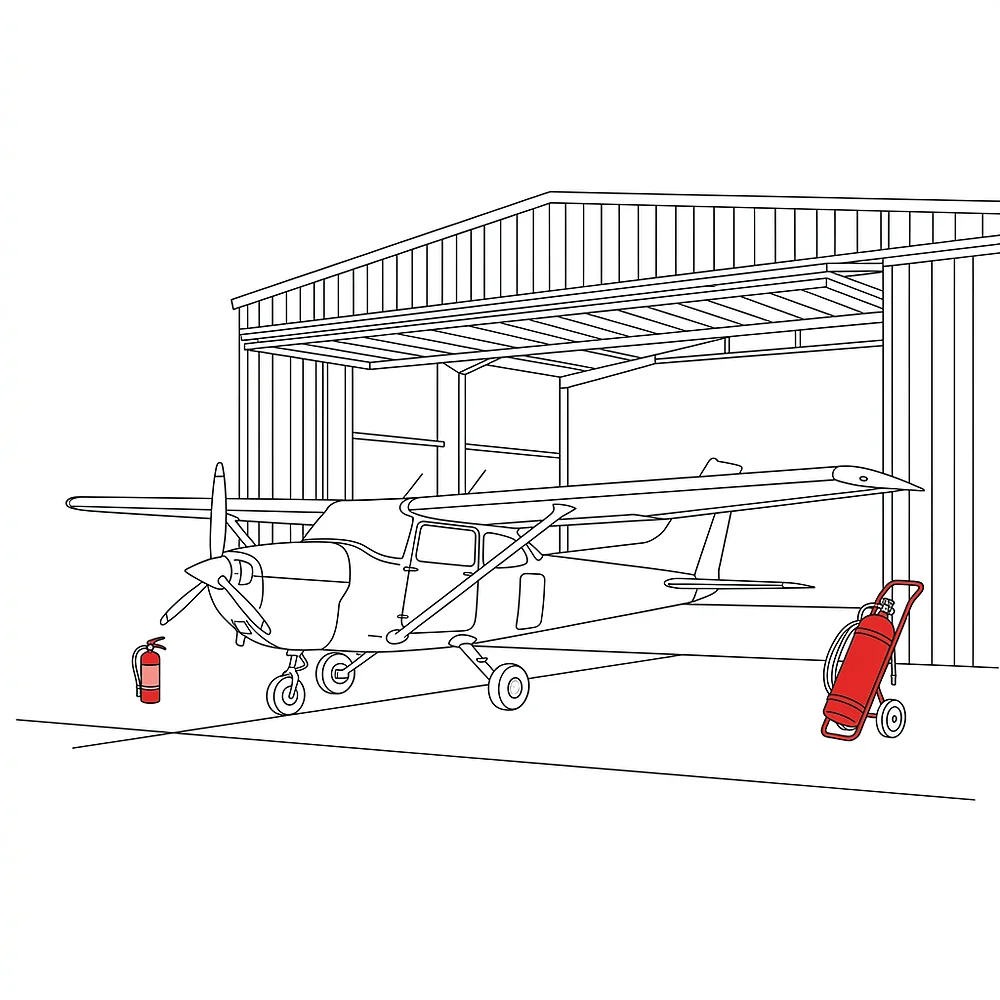
Best first path
- Use Halotron where clean discharge matters around avionics and interiors.
- Use dry chemical elsewhere when the hazard assessment calls for it.
- Confirm final aircraft placement with the owner/operator, mechanic, insurer, or AHJ.
Halotron clean-agent extinguishers
Residue-free, non-conductive handhelds for aircraft-adjacent storage, avionics spaces, and aviation maintenance areas. Products are surfaced by live catalog tags, not hardcoded SKUs.

2.5 lb
UL 2-B:C
Manufacturer: Buckeye
Buckeye 2.5 lb Halotron Clean Agent Fire Extinguisher
$275.00

5 lb
UL 5-B:C
Manufacturer: Buckeye
Buckeye 5 lb Halotron Clean Agent Fire Extinguisher
$515.00

11 lb
UL 1-A:10-B:C
Manufacturer: Buckeye
Buckeye 11 lb Halotron Clean Agent Fire Extinguisher
$1,109.00

15.5 lb
UL 2-A:10-B:C
Manufacturer: Buckeye
Buckeye 15.5 lb Halotron Clean Agent Fire Extinguisher
$1,513.00
Why aircraft buyers avoid ABC residue
Multipurpose ABC is useful general fire protection, but it is a poor fit for avionics and aircraft interiors. The residue can migrate into switches, connectors, displays, upholstery seams, and control surfaces. A small incident can turn into teardown and cleanup even when the fire is controlled quickly.
Clean-agent handhelds are selected because they are non-conductive and leave no powder cleanup behind. That makes them a better evaluation path for private aircraft, single-engine piston aircraft, flight schools, and maintenance shops that care about downtime and post-discharge cleanup.
Halotron vs Halon 1211
Legacy aircraft conversations often start with Halon 1211. New buyers are usually looking for a practical replacement or alternative, not a compliance shortcut. Halotron I is a halocarbon clean agent covered by UL 2129, while the rating on the cylinder comes through UL 711.
The important buying distinction is operational: Halotron is clean and non-conductive; ABC is lower-cost and broader for general facilities but leaves residue; CO2 is residue-free but has confined-space and no-Class-A limitations. None of those statements replace an aircraft-specific requirement.
Where this page applies
Private aircraft
Owner-flown aircraft where compact storage and residue avoidance matter.
Single-engine piston aircraft
Small-cabin applications where a 2.5 lb clean-agent unit is often the first size to evaluate.
Flight schools and private fleets
Multiple aircraft, hangars, and classrooms that need consistent clean-agent stocking.
Aviation maintenance shops
Avionics benches, hangar support areas, and aircraft-adjacent workspaces.
Halotron size ladder
2.5 lb Halotron
Compact private-aircraft and single-engine piston-aircraft storage where a smaller clean-agent handheld is preferred.
Best first look for cockpit or cabin-adjacent placement when space and weight matter.
5 lb Halotron
Larger cabin, shop, or hangar-adjacent use where more agent is desired without dry-chemical cleanup.
Common step-up size for maintenance shops and multi-aircraft owners.
11 lb Halotron
Facility or maintenance coverage around avionics benches, small hangars, and equipment areas.
More agent for ground-side response; confirm mounting and travel-distance needs.
15.5 lb Halotron
Larger clean-agent handheld for hangar, shop, and support-space coverage.
Useful when the hazard is no longer just one aircraft cabin.
Outfitting a flight school, private fleet, or maintenance shop?
Tell us the aircraft count, facility type, and preferred sizes. We will quote Halotron handhelds and related clean-agent coverage with spec sheets for your internal review.
or call 714-248-6555 · email partners@usmadesupply.com
Frequently Asked Questions
Is Halotron a Halon 1211 replacement for aircraft owners?
Halotron I is commonly positioned as a clean-agent alternative or replacement path for legacy Halon 1211 handhelds. Match the extinguisher to the aircraft, owner/operator policy, and any applicable maintenance or insurance requirement instead of treating a product page as an aircraft approval.
Why avoid ABC dry chemical in a private aircraft?
ABC dry chemical can leave fine, corrosive residue across avionics, switches, upholstery, and confined cabin surfaces. Aircraft buyers usually prefer a residue-free, non-conductive agent for cockpit or cabin-adjacent storage.
Does this guide make an FAA approval or aircraft certification claim?
No. This is buyer guidance for portable clean-agent extinguisher selection. Confirm final placement and required equipment with the aircraft documentation, mechanic, insurer, airport authority, or AHJ that applies to the aircraft or facility.
Was this page helpful?
Your feedback helps us improve our technical resources.